
Why do my eyes get red when I wear contact lenses?
If you wear contact lenses and have ever noticed red eyes, you're not alone.
It's one of the most common complaints among contact lens wearers. And while in many cases it doesn't have to be serious, it is a sign that something isn't working as it should.
Your eyes don't get red "for no reason." It could be due to dryness, overuse, poor hygiene, material sensitivity, lack of rest, or even an eye infection.
The key is not to normalize it. If red eyes appear frequently, are intense, or are accompanied by pain, blurred vision, or light sensitivity, it is best to remove your contact lenses and consult a professional.
Main causes of red eyes with contact lenses
Red eyes when wearing contact lenses can appear for different reasons. These are some of the most common causes.
1. Dry eyes
Dry eyes are one of the most frequent reasons.
When the eye is not sufficiently lubricated, the contact lens can cause more friction on the ocular surface. This can cause a gritty sensation, discomfort, itching, or redness.
External factors also influence, such as:
- spending many hours in front of screens;
- being in environments with air conditioning or heating;
- working in dry spaces;
- not blinking enough;
- wearing contact lenses for too many hours.
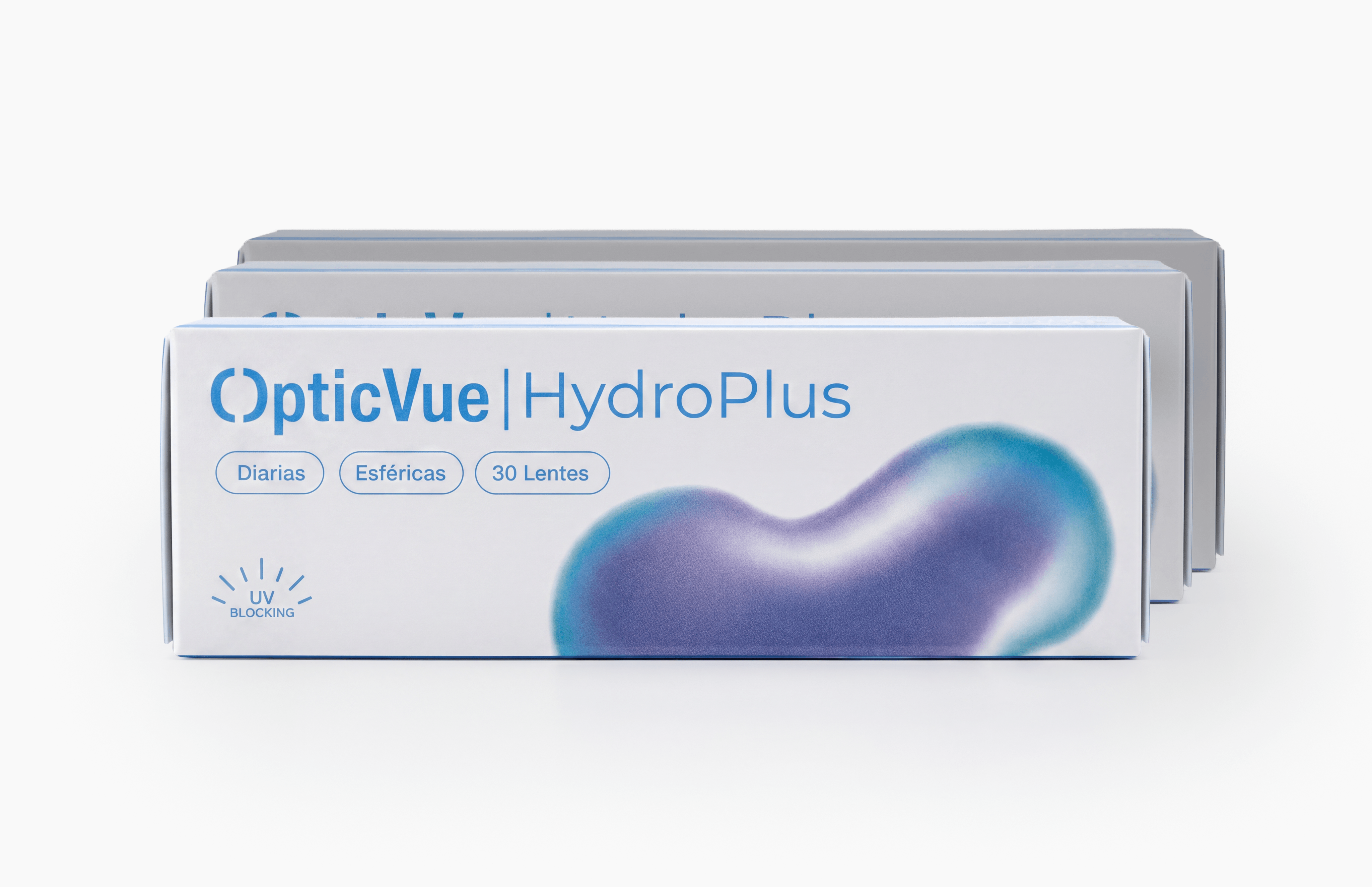
If this happens often, it may help to review what type of contact lenses you use and if they are designed for a more comfortable and hydrated experience. At OpticVue, the HydroPlus range is aimed at users looking for comfort and hydration during daily use.
2. Overuse of contact lenses
Wearing contact lenses for more hours than recommended can irritate your eyes.
Although they may feel comfortable at the beginning of the day, as the hours pass, discomfort, dryness, or redness may appear. This happens because the eye needs oxygen, blinking, and rest.
Some signs that you have worn your contact lenses for too long are:
- red eyes at the end of the day;
- feeling of eye fatigue;
- blurred vision;
- dryness;
- wanting to remove your contact lenses;
- gritty sensation.
If this happens frequently, it's advisable to alternate with glasses at certain times and review whether the type of contact lens adapts well to your routine.
3. Dirty or poorly maintained contact lenses
In the case of monthly contact lenses, cleanliness is essential.
A poorly cleaned contact lens can accumulate tear deposits, dust, proteins, or other debris. This can make the contact lens less comfortable and increase the risk of irritation.
To reduce this problem:
- clean your contact lenses with appropriate contact lens solution;
- do not reuse the solution from the case;
- do not mix old solution with new solution;
- do not clean contact lenses with water;
- change the case frequently;
- respect the replacement period.
If you use monthly contact lenses, contact lens solution is part of your daily routine. It's not an extra: it's an important part of maintenance.
4. Material sensitivity or poor fit
Not all contact lenses are made from the same material or feel the same in all eyes.
Some people may need contact lenses with greater hydration, a different design, a different material, or a different fit. If you frequently notice red eyes, your current contact lenses may not be the most suitable for your routine.
This doesn't mean that "contact lenses are bad for you" in general. Sometimes, the problem lies in the specific type of contact lens, the wearing time, or the maintenance method.
5. Sleeping with contact lenses
Sleeping with contact lenses is a common cause of red eyes.
During sleep, the eye remains closed for hours and receives less oxygen. If you also wear a contact lens, the risk of dryness, irritation, and infection increases.
If you have fallen asleep with contact lenses, do not remove them forcefully upon waking. You can hydrate your eye with contact lens-compatible drops, wait a few minutes, and carefully remove them.
If you notice pain, blurred vision, intense redness, or light sensitivity, consult a professional.
6. Incompatible drops or products
Sometimes the problem is not just the contact lens, but the products used around it.
Not all drops are compatible with contact lenses. Nor should you use contact lens solution as if it were eye drops. All-in-one solution is for cleaning and storing reusable contact lenses, not for applying directly to the eye.
If you use drops, check that they indicate they are suitable for contact lens wearers or consult a professional.
Is it normal to have red eyes when wearing contact lenses?
Slight, occasional redness can occur, especially after many hours of use, in dry environments, or after a day of screen time.
But it should not be frequent or intense.
If your eyes get red every time you wear contact lenses, you need to review what is happening: wearing time, hygiene, type of contact lens, dry eyes, or possible sensitivity.
And if red eyes appear along with pain, discharge, persistent blurred vision, or light sensitivity, do not ignore it.
What to do if you have red eyes with contact lenses
If you notice red eyes while wearing contact lenses, it is advisable to:
- Remove the contact lenses.
- Do not rub your eyes.
- Wear glasses for a few hours.
- Check if the contact lenses are damaged or dirty.
- If they are monthly, clean and store them correctly.
- Do not put them back in if the discomfort continues.
- Consult a professional if the redness does not improve.
Do not try to "tough it out" with contact lenses in if your eye is clearly irritated.
How to prevent red eyes when wearing contact lenses
To reduce the risk of red eyes, you can follow these guidelines:
- Respect the recommended wearing time.
- Wash and dry your hands thoroughly before handling contact lenses.
- Use appropriate contact lens solution if you wear monthly lenses.
- Do not sleep with contact lenses unless professionally advised.
- Do not clean or store contact lenses with water.
- Blink frequently if you work in front of screens.
- Alternate with glasses when you feel eye strain.
- Do not use drops incompatible with contact lenses.
- Do not extend the use of contact lenses beyond what is indicated.
Comfort doesn't just depend on the contact lens. It also depends on how you use it and how you care for it.
When should I be concerned?
You should consult a professional if red eyes are accompanied by:
- intense pain;
- light sensitivity;
- discharge;
- persistent blurred vision;
- excessive tearing;
- strong foreign body sensation;
- worsening after removing contact lenses;
- redness that does not improve.
The FDA also recommends removing contact lenses and contacting a professional if symptoms of irritation or infection appear, and not reinserting them until advised.
What type of contact lenses should you choose if your eyes get irritated?
If you frequently experience irritation or dryness, it might be a good idea to review the type of contact lenses you use.
Daily contact lenses can be practical because you start with a new pair every day and don't need nightly cleaning. Monthly contact lenses, on the other hand, require a correct routine with contact lens solution and a clean case.
The material can also influence. Some people look for contact lenses with greater hydration or materials designed for long days, such as silicone hydrogel contact lenses.
At OpticVue, you can find daily and monthly contact lenses for myopia, with options designed for different wearing routines.
Conclusion
Red eyes with contact lenses are usually due to dryness, prolonged use, poor hygiene, material sensitivity, or lack of eye rest.
It's not something you should normalize.
If it happens occasionally and improves when you remove your contact lenses, it may be due to fatigue or dryness. But if it recurs, is intense, or appears along with pain, blurred vision, discharge, or light sensitivity, it's advisable to consult a professional.
Choosing appropriate contact lenses, respecting wearing times, and maintaining good hygiene is the best way to reduce discomfort.
Frequently asked questions
Is it dangerous to have red eyes with contact lenses?
Not always, but it should not be ignored. If it is frequent, intense, or accompanied by pain, discharge, light sensitivity, or blurred vision, you should remove the contact lenses and consult a professional.
Can dryness cause red eyes?
Yes. Dry eyes are one of the most common causes of red eyes when wearing contact lenses, especially after many hours of use or in dry environments.
What should I do if my eyes get red with contact lenses?
Remove your contact lenses, do not rub your eyes, and wear glasses for a few hours. If the redness does not improve or pain appears, consult a professional.
Can sleeping with contact lenses cause red eyes?
Yes. Sleeping with contact lenses can cause dryness, irritation, and increase the risk of eye infection.
Does contact lens solution help soothe red eyes?
No. Contact lens solution is for cleaning, storing, and disinfecting contact lenses, not for direct application to the eye.
Can changing the type of contact lens help?
In some cases, yes. If your current contact lenses are uncomfortable, the material, hydration, wearing time, or maintenance routine may be a factor.


Leave a comment
This site is protected by hCaptcha and the hCaptcha Privacy Policy and Terms of Service apply.