
Can you sleep with monthly contact lenses?
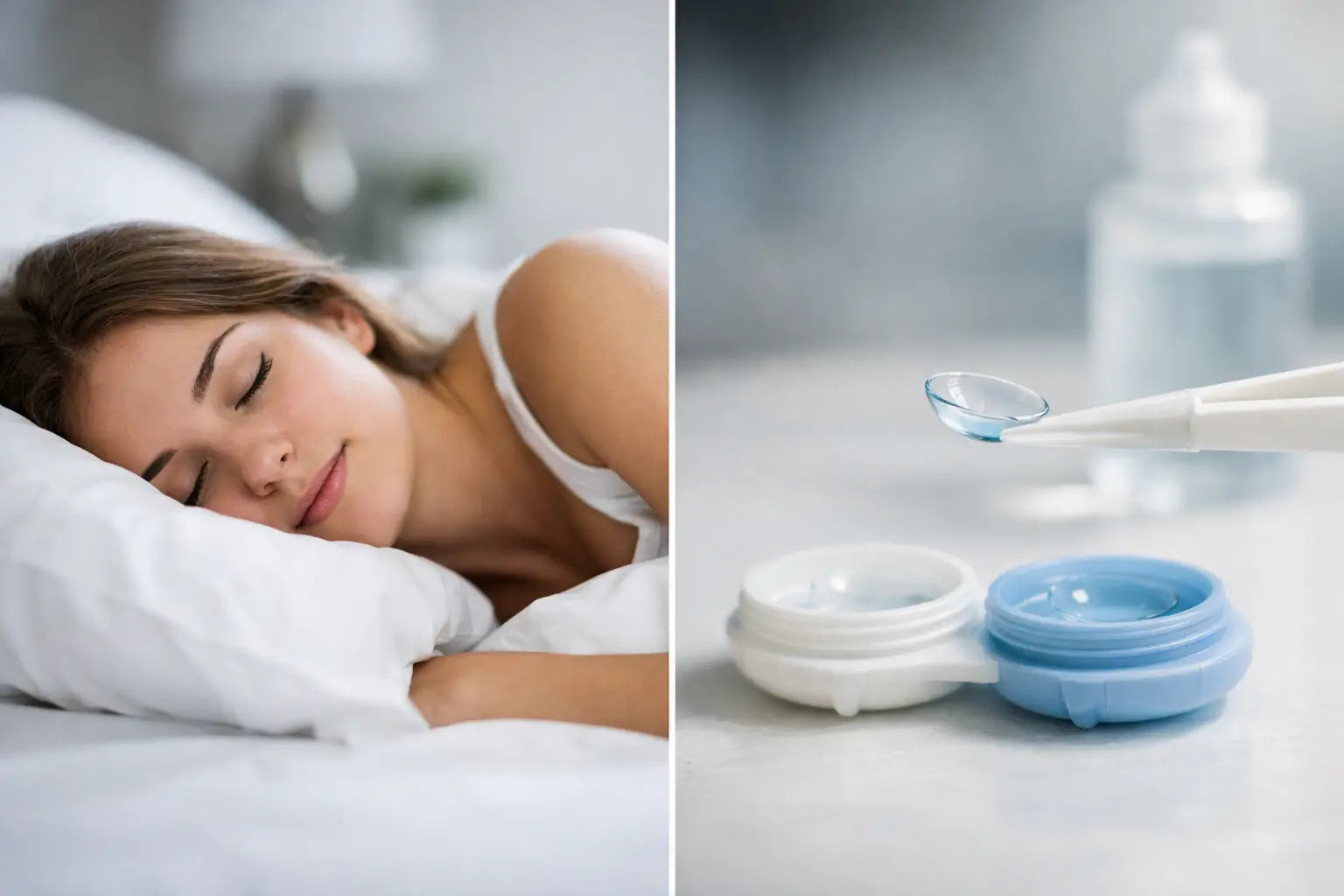
Has it ever happened to you: you're running late, lie down on the sofa for five minutes, and wake up an hour later. Or worse, you get into bed thinking "I'll take them out now" and wake up with your contact lenses still in. If you're wondering if you can sleep with monthly contact lenses, the short answer is clear: generally, you shouldn't, unless your specialist has recommended a model designed for overnight wear.
The doubt is very common because "monthly" refers to the replacement schedule, not how they are used during sleep. A monthly lens is designed to last up to 30 days following the correct guidelines for use, cleaning, and rest. This does not mean that all of them allow you to sleep with them. And herein lies the confusion that causes the most problems.
Can you sleep with monthly contact lenses or not?
It depends on the exact type of lens and professional recommendation. Most monthly lenses on the market are designed for daily wear, meaning they are inserted in the morning and removed before sleeping. Although they may be comfortable and your eyes feel fine for many hours, that doesn't automatically make them suitable for overnight wear.
There are some silicone hydrogel lenses with high oxygen transmissibility that may be approved for extended or even overnight wear in certain cases. But this is not decided by intuition or because "my friend does it and nothing happens." It is assessed with a review, fitting, and follow-up. If the packaging, product data sheet, or your optician-optometrist has not explicitly indicated it, assume you should not sleep with them.
Why sleeping with monthly contact lenses increases risk
When you sleep, your eyes receive less oxygen. If you also wear a contact lens, that oxygenation is reduced even further. The result can be drier, more irritable, and more vulnerable eyes. Sometimes you only notice discomfort upon waking. Other times, complications arise that are no longer simple discomfort.
Sleeping with monthly contact lenses can cause redness, a gritty sensation, temporary blurred vision, and marked dryness. It also increases the risk of infections and corneal inflammation, especially if you have also extended the replacement period or are not following cleaning guidelines properly.
It's important to be direct here: the problem is not just "they bother me when I wake up." The real problem is that repeating this habit increases the likelihood of eye damage. And with visual health, it's not worth gambling that nothing will happen this time.
Not all discomfort means the same thing
If you occasionally fall asleep, you might only wake up with dryness and slightly blurred vision that improves after removing the lens and lubricating your eye. But if you experience pain, intense tearing, light sensitivity, discharge, or your eye remains red several hours later, do not normalize it. These are warning signs and should be checked as soon as possible.
What happens if I fall asleep with monthly contact lenses one night?
The first thing is not to pull them out dry as soon as you open your eyes. After several hours of sleep, the contact lens may have adhered more to the eye surface. If you try to remove it suddenly, you could irritate your eye even more.
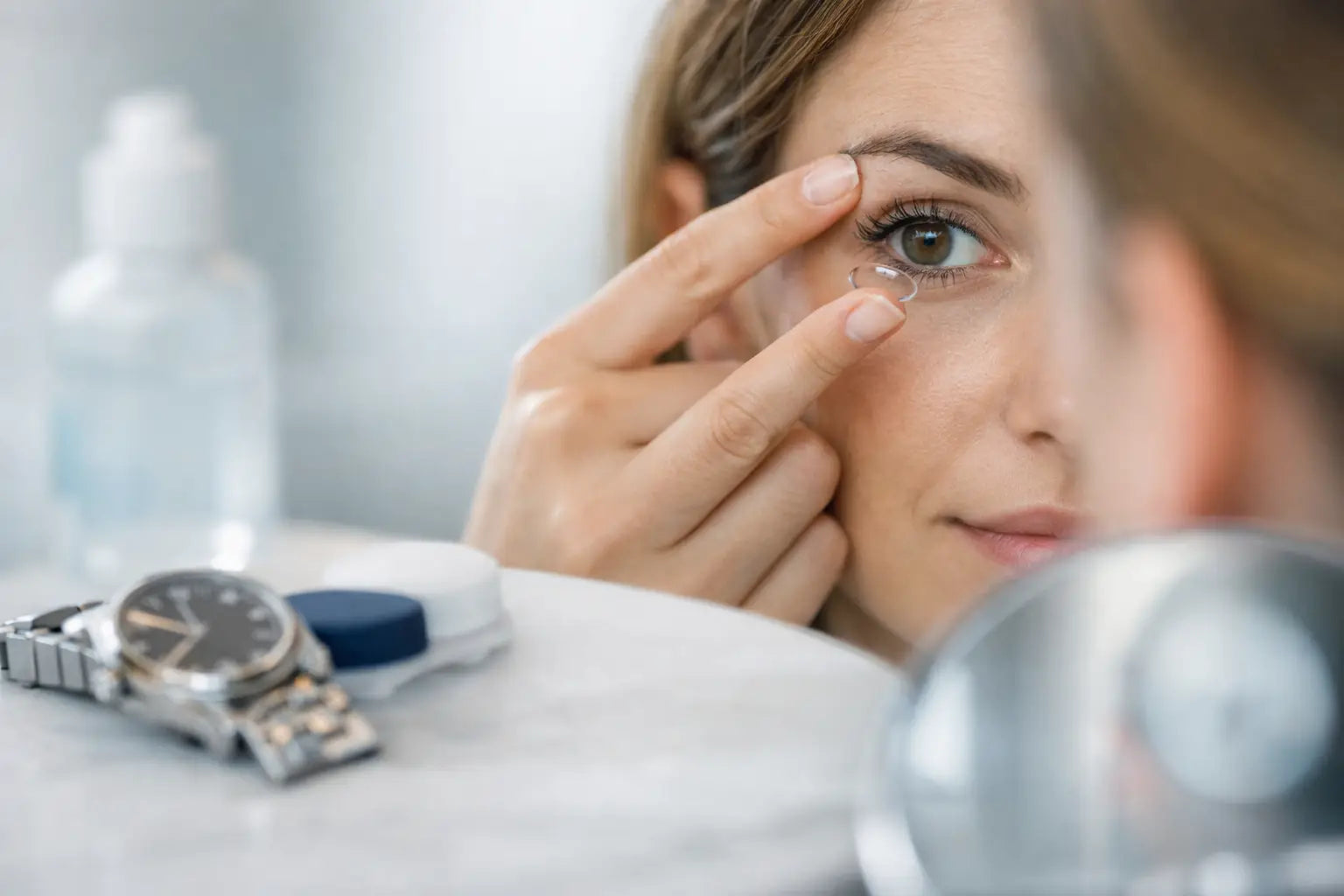
The recommendation is to blink several times, use artificial tears compatible with contact lenses if you usually have them handy, and wait a few minutes for the lens to regain mobility. Then, remove it with clean hands. Once out, observe your eye. If you notice rapid relief and there is no pain or persistent redness, it is usually best to rest from contact lenses that day or at least for a few hours and wear glasses.
If the discomfort persists, if your vision is worse, or if you can't easily remove the lens, it's time to seek professional evaluation. A timely consultation is better than several days dragging out an irritation that could have been avoided.
The difference between extended wear and misuse
Many people confuse two different ideas. One thing is a contact lens made of material suitable for extended wear. Another very different thing is to use any monthly lens as if it were. They are not the same.
Extended wear depends on the product design, the level of oxygenation, your tears, your ocular history, and the specialist's indication. Even with lenses approved for sleeping, not all users are good candidates. If you have dry eyes, allergies, a tendency to irritation, or spend many hours in front of screens, the criteria may be more conservative.
Therefore, if you're looking for maximum comfort, don't just focus on "monthly or daily." It also matters if you need more hydration, more oxygen, or a simpler routine. Choosing well prevents problems and makes wearing contact lenses truly comfortable from Monday to Sunday.
Can you sleep with monthly contact lenses if they are high oxygen?
Only in some cases and with professional indication. A high oxygen lens improves oxygen flow to the cornea and may make it more suitable for long daily wear. But that does not equate to a carte blanche to sleep with it whenever you feel like it.
Furthermore, there is another important nuance: a lens suitable for overnight wear does not mean you should sleep with it every night. Sometimes this possibility is considered as a specific solution for certain habits or needs, not as a universal routine. The clearer the guidelines, the less room there is for error.
If what worries you is occasionally falling asleep due to fatigue, perhaps you don't need to "force" a monthly lens for overnight use. You might consider reviewing your routine or evaluating alternatives that better suit your daily life.
How to know if your monthly contact lenses are suitable for sleeping
The valid reference is not what you remember, nor what you think you read months ago. You should check three things: the manufacturer's indication, the instructions given during your fitting, and the current state of your eyes.
If at no point have you been told that you can sleep with them, it is sensible to remove them every night. And if you have doubts because you haven't had your prescription checked in a while or have changed models, it's a good time to confirm before continuing to improvise.
It also helps to read the packaging carefully and not just go by the brand name. Two monthly contact lenses may seem similar yet have different usage recommendations.
What to do to avoid problems if you use monthly contact lenses
The best protection is not about enduring longer hours, but about maintaining a simple and consistent routine. Removing them before sleeping, respecting the actual monthly replacement, and using an appropriate solution makes more difference than it seems. When these three things fail, discomfort usually begins.
It's also advisable not to extend a lens "a few extra days" to use up the box. The material ages, accumulates deposits, and loses performance. Sometimes the eye notices it gradually, and one thinks it's fatigue or air conditioning, when in reality the lens is no longer performing as it should.
If you also experience dryness at the end of the day, look for an option designed to improve comfort, not a temporary patch solution. There are monthly ranges aimed at users who need more hydration or more oxygen, and that difference is very noticeable in real use.
When it's advisable to consider daily lenses instead of monthly ones
If you frequently arrive exhausted and fall asleep without taking them out, perhaps the problem is not just the habit, but the type of lens that suits you. Daily lenses are often a very practical option for people with variable routines, occasional use, or a tendency to want to simplify things as much as possible.
Monthly lenses, on the other hand, work very well when you maintain a stable routine and don't mind cleaning them every day. They are comfortable, usually very cost-effective for replacements, and suit many regular users. But they are not the best choice for everyone equally.
Choosing between daily and monthly lenses is not just about cost. It's about real comfort, consistency, and ocular health. The better the lens fits your lifestyle, the easier it will be to use it correctly.
Signs that you should review your fitting
If you often fall asleep with your contact lenses, if they feel drier every morning, or if you end the day with habitual redness, it's worth reviewing. It doesn't always mean the lens is bad. Sometimes it simply isn't the most suitable for you anymore, or your eye needs a different material, a different routine, or a more disciplined replacement.
In these cases, having an accessible brand that is easy to replace and supported by pharmacies adds peace of mind. Because when purchasing is simple and you know exactly what lenses you need, it's easier to maintain a correct routine and avoid rushing or improvising.
Falling asleep once with monthly contact lenses does not make you a serious case, but repeating it is a bad habit. If in doubt, think about this: the correct lens is not the one that lasts the longest, but the one that allows you to see well, feel comfortable, and take care of your eyes without complicating your life.


Leave a comment
This site is protected by hCaptcha and the hCaptcha Privacy Policy and Terms of Service apply.