
How to choose contact lenses for myopia without fail
If you've ever looked at a box of contact lenses and thought, "I just want to see well and not complicate things," you're on the right track. Understanding how to choose contact lenses for myopia shouldn't turn into a technical race or a blind purchase. The key is to cross-reference three things: your prescription, your lifestyle, and how your eyes behave throughout the day.
Myopia makes you see poorly at a distance, but that doesn't mean any negative lens will work equally well for you. Two people with the same prescription might need different options depending on whether they spend many hours in front of screens, tend to have dry eyes, or prefer the convenience of fresh lenses every day. Choosing well isn't about finding the cheapest or most popular option, but rather the one that truly feels comfortable and effortlessly fits into your routine.
How to choose contact lenses for myopia based on your individual needs
The first step is to start with an updated prescription. This seems basic, but many people repurchase with old data and then experience unstable vision, eye strain, or discomfort. Glasses prescriptions don't always exactly match contact lens prescriptions, especially with higher powers, so it's always best to use the reference provided for contact lenses.
From there, you need to look at the lens parameters. For myopia, the most visible factor is the negative diopter number, but it's not the only important data. The base curve and diameter influence the fit, and a poor fit is noticeable: the lens moves too much, causes discomfort, or feels strange when blinking. That's why, when you reorder your lenses, don't just focus on the prescription. Check that the other values match those you already know work for you.
It's also worth considering the actual use you'll give them. Wearing contact lenses twice a week for going out or playing sports is not the same as wearing them ten hours a day, Monday to Friday. This is where a sensible choice makes the difference between a purchase you repeat without thinking and a box that sits half-used in a drawer.
Daily or monthly: the decision that most changes your experience
If you're looking for the most convenient and practical option, daily disposable lenses usually win. They require no maintenance; you open a new pair every day and forget about solutions, cases, and cleaning. For many people with myopia who value hygiene, have an active lifestyle, or use lenses irregularly, they are the simplest solution.
Monthly lenses are a better fit when you wear lenses often and want to optimize the cost per use. However, they require more consistency. You need to clean them well, store them correctly, and respect replacement schedules. If you appreciate simple routines, dailies might be worth it even if the unit price is higher.
There isn't one "best" category for everyone. There's a best one for you. If you prioritize zero complications, go with dailies. If you're looking for a more economical option for frequent use and are disciplined with maintenance, go with monthlies.
What to look at besides the prescription
This is where many people succeed or fail. Seeing well is only one part. The other is comfortably wearing the lenses for as many hours as you need them.
The material matters, especially if you spend many hours outside or in front of a computer. Some lenses are designed to promote better oxygenation, which is often appreciated when worn for long periods. Others focus on hydration, which is key if you notice dryness in the afternoon, if you work in air conditioning, or if you blink less due to screen use.
The frequency of use should also weigh on your decision. If you only wear them for working out, on weekends, or for occasional events, paying for a monthly lens might not make much sense. On the other hand, if they are part of your daily life, a well-chosen monthly can give you a good balance between price and performance.
And then there's your eyes' tolerance. Some users practically forget they're wearing them. Others immediately notice any slight dryness. If you already know your eyes are sensitive, don't put it off. It's worth prioritizing a range designed to provide more hydration from the start.
If you have dry eyes, choose with that problem in mind
One of the most common mistakes when choosing contact lenses for myopia is thinking that dry eyes "will just go away." It usually doesn't. If your eyes get dry, irritated, or you notice your lenses more at the end of the day, you need an option adapted to that.
In these cases, lenses with a greater focus on hydration and sustained comfort tend to work better. It also helps to review your habits: many hours of screen time, dry environments, or lack of sleep worsen the sensation. The right lens can greatly improve the experience, but it's also advisable not to force use when your eye is asking for rest.
If you also need contact lens solution because you use monthlies, don't treat it as a minor detail. Good maintenance directly influences daily comfort. Sometimes the problem isn't just the lens, but how it's being cared for.
Common mistakes when buying contact lenses for myopia
There are very common mistakes, and almost all of them can be fixed if caught in time. The first is buying solely based on price. Saving a few euros is pointless if they bother you after four hours, you see worse, or you end up alternating more with glasses because you can't tolerate them well.
The second is changing contact lens types without considering your routine. Switching from dailies to monthlies because they seem more cost-effective can work, but only if you're going to follow the maintenance instructions properly. Otherwise, comfort decreases, and so does the experience.
The third is ignoring mild symptoms. Occasional itching, slightly blurry vision at the end of the day, or a gritty sensation are not unimportant details. They are signs that something isn't quite right: material, hydration, wear time, or even replacement schedule.
And the fourth is buying late, when you're already using your last lens. When you're in a hurry, you compare less effectively and end up repeating out of inertia or choosing without checking parameters. For a replenishment product, anticipating always works in your favor.
How to get it right when buying online without complicating things
Buying contact lenses online makes sense when you already know what parameters you need and want to restock quickly. It's convenient, allows you to compare formats, and is very practical for not running out of stock at home. But that ease shouldn't be confused with buying just anything.
Before placing an order, check your prescription, base curve, diameter, replacement frequency, and number of units. It seems obvious, but mistakes usually occur right there. It's also worth considering if a value pack is worthwhile for you, especially if you already know which lens works and you frequently repurchase.
For many users, the most comfortable combination is simple: buying online when they want speed and having the peace of mind of finding the brand in a pharmacy if they prefer in-person support or a last-minute purchase. This balance between convenience and health trust provides a lot of peace of mind, especially for a product so linked to daily well-being.
What kind of user are you?
If you're having trouble deciding, a practical way to clarify things is to think about your profile. If you want maximum comfort and zero maintenance, dailies will probably suit you best. If you wear lenses almost every day and are consistent with cleaning, monthlies might be more cost-effective. If you end the day with tired or dry eyes, you need to prioritize hydration. And if you spend many hours wearing lenses, it's worth considering materials designed to promote oxygenation.
It's not about complicating it, but about filtering well. When you get those few variables right, the choice stops being a recurring doubt and becomes an easy purchase to repeat.
How to choose contact lenses for myopia if it's your first purchase
If you're buying for the first time, try not to decide solely based on a generic recommendation from someone else. What works perfectly for someone else might not suit you. Your prescription, your tearing, your schedule, and your habits matter more than any isolated opinion.
For a first purchase, it's often a good idea to start with an option that simplifies adaptation and reduces points of friction. That's why many people feel comfortable starting with daily lenses, especially if they are still trying them out or don't know how many hours they will wear them continuously. If you later find that you wear them often and manage them well, you can then consider other alternatives.
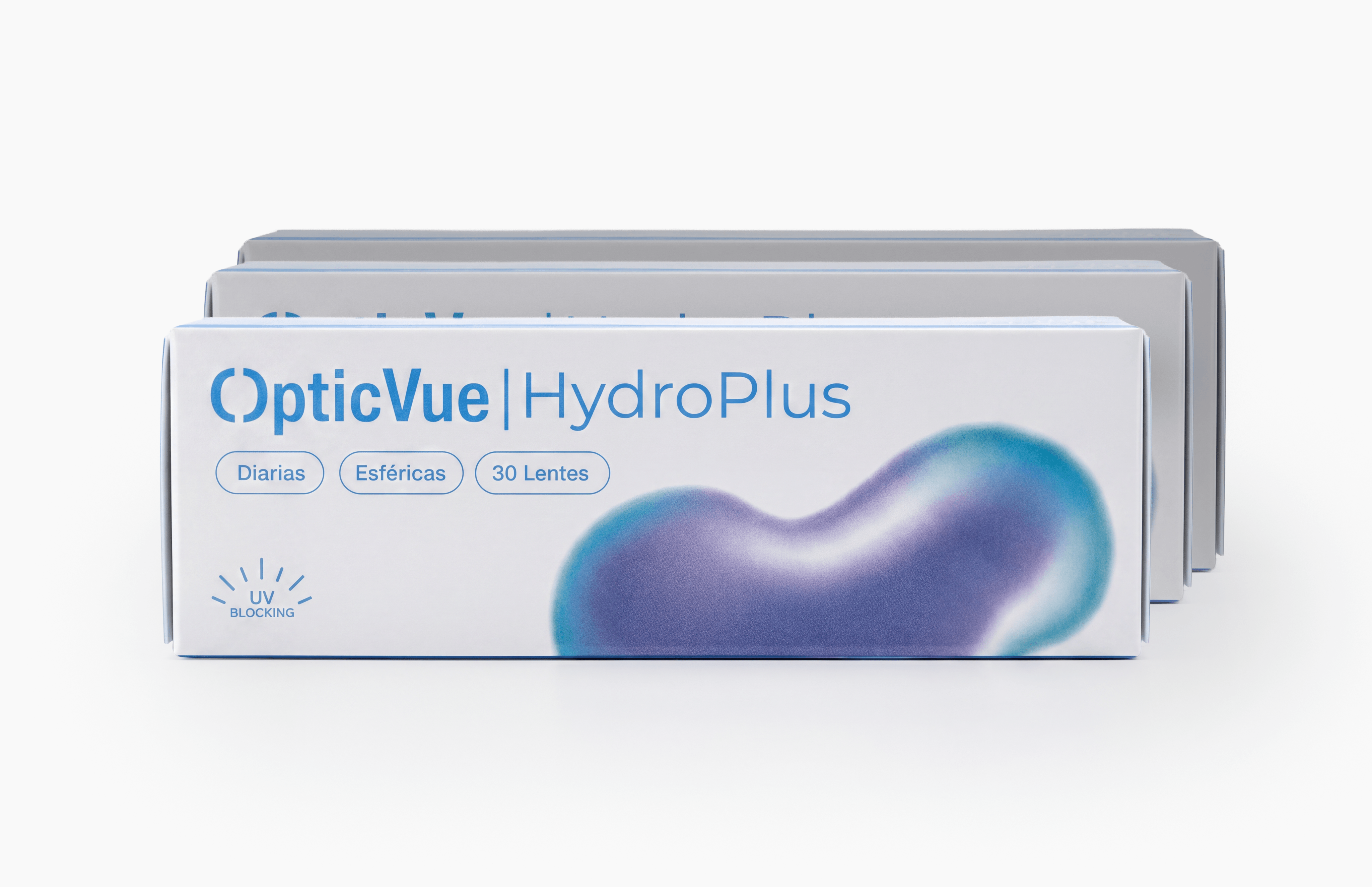
Brands with a clear focus on myopia, hydration, and daily use, like OpticVue, are especially easy to understand for those who don't want to waste time comparing too many variables. When information is well-organized and purchases can be repeated without complications, the whole process improves.
Choosing contact lenses for myopia isn't about finding a perfect option in the abstract. It's about finding ones that adapt to you, feel comfortable from morning to night, and that you can repurchase without thinking too much. When that happens, they simply work. And in vision care, that feeling of ease is worth much more than it seems.


Leave a comment
This site is protected by hCaptcha and the hCaptcha Privacy Policy and Terms of Service apply.