
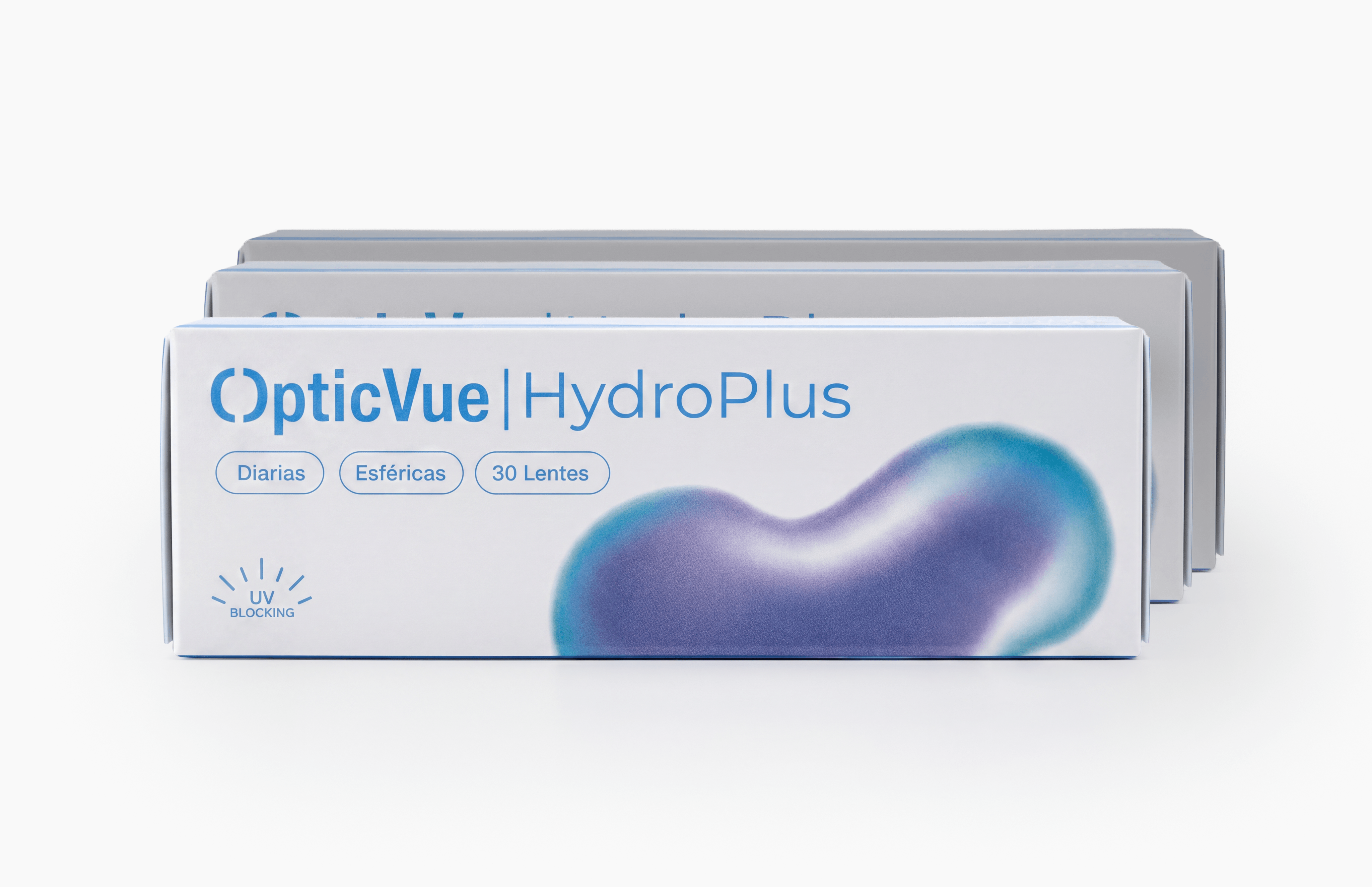

Guide for dry eyes with contact lenses
If you wear contact lenses and in the afternoon you feel stinging, slightly blurry vision, or the sensation of grit in your eyes, this guide for dry eyes with contact lenses is for you. There’s no need to resign yourself to discomfort or assume that contact lenses "are no longer for you." Often, the problem isn't wearing them, but how you wear them, what type you choose, and when it’s time to change habits.
Guide for dry eyes with contact lenses: what's going on
Dry eye doesn't always appear suddenly. Sometimes it starts with mild discomfort at the end of the day, a greater need to blink, or a contact lens that seems to move less than usual. Other times it comes with itching, reflex tearing, or clear intolerance to prolonged use.
When you wear contact lenses, the ocular surface needs to maintain a stable tear film. If that tear evaporates too quickly or isn't of sufficient quality, the lens can dry out, and comfort significantly decreases. Screen time, air conditioning, heating, certain medications, and even spending many hours without resting your eyes also play a role.
Here's an important nuance: not all dry eyes are the same. Some people have occasional dryness due to environment or eye strain, while others have a more constant problem that requires professional evaluation. Knowing where you stand significantly changes the solution.
Signs that your contact lenses are not suiting you
You don't have to wait until your eyes are very irritated. There are common signs that should be taken seriously. If you feel relief when you first put them on but then they bother you, if you struggle to make it to the end of the day, if you blink more to focus, or if you tolerate them worse in the office, car, or enclosed spaces, there's probably a hydration or fit problem.
It's also worth looking at your routine. Lack of sleep, extending contact lens use too much, or reusing them beyond the indicated time often significantly worsens the feeling of dryness. With monthly lenses, for example, poor maintenance can cause them to accumulate deposits and become uncomfortable prematurely.
Daily or monthly: what usually works best
One of the most common questions in any guide for dry eyes with contact lenses is whether daily or monthly lenses are better. The short answer is: it depends on your usage and how your eyes react.
Daily contact lenses usually work very well when you're looking for maximum comfort and minimal residue buildup. You start with a fresh lens every day, so there's less exposure to protein deposits, dust, or environmental debris. For people with dryness, sensitive eyes, or long routines away from home, they are often a very welcome option.
Monthly lenses can work well if you tolerate them correctly, maintain rigorous cleaning, and choose a material designed to better preserve hydration. They have the advantage of cost per use, especially if you wear them daily, but they require more discipline. If you already notice dryness, it's not advisable to compensate by extending wear beyond the recommended hours or relaxing maintenance.
In practice, if your discomfort is frequent, switching to a daily lens or a specific range for dry eyes usually makes a difference. If you prefer monthly lenses due to habits or budget, it's worth reviewing the material, oxygenation, and cleaning solution before ruling them out.
The material matters more than it seems
Not all contact lenses behave the same, even if they have your prescription. The material influences how they retain water, how they let oxygen through, and how the lens feels throughout the day. For dry eyes, a combination of good hydration and high oxygen transmissibility is usually desirable.
This doesn't mean there's a perfect lens for everyone. Some users prioritize an immediate moist sensation, while others need stability for many hours. If you work long hours, work with screens, or spend time in dry environments, you need a lens designed to maintain comfort when the environment is not helping.
That's why it makes sense to look for specific ranges for dry eyes. In brands with a practical and health-focused approach, like OpticVue, this type of segmentation makes selection easier and prevents buying something based on intuition that doesn't fit your daily life.
Habits that worsen dry eye without you realizing it
Sometimes the problem isn't just the contact lens. Looking at screens for hours reduces blink frequency, which causes tears to evaporate faster. If you also work with air conditioning or direct heating, the ocular surface suffers more.
Another very common mistake is extending use "just a little longer." If a lens is designed for a certain daily wear time or specific replacement schedule, stretching it usually ends up being costly in terms of comfort. The same goes for sleeping with contact lenses if they are not indicated for it or using a solution that doesn't suit you.
General hydration also plays a role. Drinking too little water doesn't solely explain dry eye, but it can worsen the sensation. And though it sounds basic, resting your eyes and consciously blinking when working in front of a computer helps a lot more than it seems.
How to improve comfort starting today
If you notice dryness when wearing contact lenses, the first useful step is to review when the discomfort appears. If it starts at the end of the day, you might need a more comfortable lens for prolonged use or reduce wearing hours. If it appears almost from the beginning, there might be a problem with adaptation, material, or the ocular surface.
Then, it's advisable to simplify your routine. Always respect the replacement schedule, don't wear contact lenses for more hours than indicated, and make sure to handle them with clean, dry hands. If you use monthly lenses, the solution also matters: an unsuitable one can increase irritation instead of relieving it.
When you work many hours with screens, it helps to take short breaks and look away frequently. You don't need to turn it into a complicated ritual. Just interrupt for a few seconds, look into the distance, and blink several times. That simple gesture improves tear distribution and reduces the sensation of a dry lens sticking to the eye.
When to change contact lenses and not just routine
There comes a point when insisting on the same contact lens no longer makes sense. If you've improved your habits and still experience stinging, variable vision, or recurring discomfort, it's probably time to change the type of lens. Sometimes the switch from monthly to daily is what solves the problem. Other times, a lens with better oxygenation or specifically designed for dry eyes is enough.
It's not advisable to choose solely based on price or habit. A cheaper lens that forces you to remove it earlier or causes constant discomfort ends up being worse. The useful criterion here is very simple: that you can wear it with good vision and real comfort, not just "endure" it.
When to seek professional help
If you have frequent redness, pain, severe light sensitivity, or notice that you no longer tolerate contact lenses as before, it's time to consult a professional. Also if you depend on artificial tears several times a day to wear them or if the discomfort appears even without using them.
Dry eye can have different causes and isn't always corrected by changing lenses. In some cases, it's advisable to review tear quality, the ocular surface, or even external factors such as medication, allergies, or blepharitis. The sooner it's detected, the easier it is to find a comfortable and sustainable solution.
How to better choose your next replenishment
If you are going to buy your next contact lenses and already know you have a tendency towards dry eyes, don't just look for prescription and price. Pay attention to whether they are daily or monthly, whether they are focused on hydration, the time you spend with screens, and whether you usually spend many hours away from home.
A good purchase is not the one that seems simplest at the moment, but the one that prevents discomfort and gives you continuity. If a lens allows you to comfortably reach the end of the day, stick to your routine, and replenish without complications, you've made the right choice. And if you can also choose between fast online purchase or a pharmacy, even better: less friction, more consistency, and less temptation to extend a pair that you should have already changed.
Your eyes shouldn't ask for patience every afternoon. If you notice dryness with contact lenses, listening to that signal in time is usually the quickest way to wear them comfortably again.

Leave a comment
This site is protected by hCaptcha and the hCaptcha Privacy Policy and Terms of Service apply.