
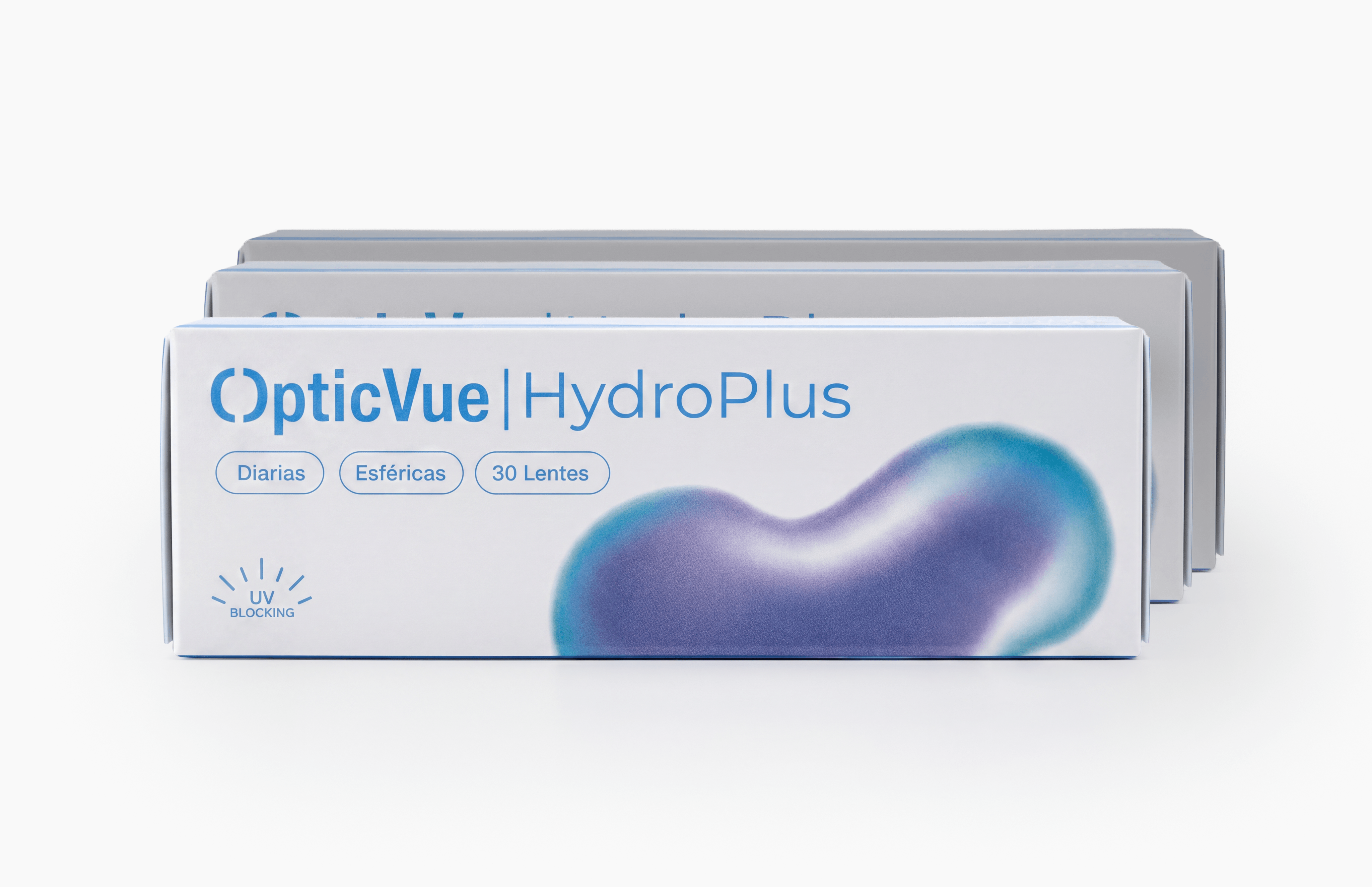

Best contact lenses for dry eyes: how to choose
If at the end of the day you notice stinging, slightly blurred vision, or the sensation that your contact lens is sticking to your eye, it's not a prescription issue: you're probably experiencing discomfort. Choosing the best contact lenses for dry eyes isn't just about "more hydration," but about finding the right balance between material, usage, wear time, and daily routine.
The good news is that you don't need to become an expert in technical terms to get it right. It is helpful to know which features truly make a difference, because not all dry eyes behave the same way, and not all contact lenses work well for all people. Some people clearly improve with daily contact lenses, while others are comfortable with monthly lenses if the material and maintenance are appropriate.
What the best contact lenses for dry eyes have
When an eye tends to dry out, the contact lens cannot simply be a "support" for the prescription. It needs to help maintain a stable feeling for hours. That's why the best contact lenses for dry eyes usually excel on three fronts: hydration, oxygen transmissibility, and tear film stability on the lens surface.
Hydration matters, but not in just any way. A highly hydrated contact lens can work very well in some cases, although in other eyes it ends up dehydrating faster during the day. This is where the material comes in: some lenses are designed to retain water; others, to maintain comfort even if the environment is drier, as occurs with air conditioning, screens, or heating.
Oxygen also matters. If the eye receives less oxygen, there is usually a greater feeling of heaviness and less tolerance as the hours pass. For this reason, many users with dryness notice improvement with high-oxygenation materials, especially if they wear contact lenses for many hours a day.
Then there's tear stability, which is often what separates a decent contact lens from one you truly enjoy wearing. If the lens surface remains uniform, the eyelid rubs less and vision feels cleaner. When this doesn't happen, typical discomfort begins: constant blinking, needing to remove the contact lens prematurely, or a gritty sensation.
Daily or monthly: which option usually works best
There's no single answer here, though there is a clear trend. For many people with dry eyes, daily contact lenses are usually the most comfortable option. You start with a fresh lens every day, avoid deposit buildup, and don't rely on perfect cleaning. That combination significantly reduces discomfort in sensitive eyes.
Furthermore, dailies fit very well if you spend many hours away from home, use screens daily, or simply don't want to bother with solutions and cases. They are practical, hygienic, and usually provide a fresher feeling from morning to night.
Monthly lenses, on the other hand, can be a good choice if you're looking to save on repurchases and already know that you tolerate that format well. However, with dry eyes, it's advisable to be more demanding with the material and maintenance. If a monthly lens is not cleaned properly or is worn longer than recommended, comfort usually decreases sooner. This is not a minor detail: sometimes the problem is not with the prescription or the brand, but with using a monthly lens as if it were more resistant than it actually is.
In practice, if you have frequent dryness or have had bad experiences, starting with dailies is usually the easiest approach. If your dryness is moderate and you want a continuous wear option, a monthly lens specifically for comfort and hydration may be a better fit.
Signs that a contact lens is not suitable for dry eyes
Not all discomfort means the same thing, but there are some pretty clear patterns. If you feel good for the first few hours and then your eye starts to "reject" the contact lens, there's usually a problem with dehydration or oxygenation. If you feel discomfort from the beginning, the fit or material may not be suitable.
It's also worth noting small habits that betray a lack of comfort: blinking forcefully to reposition the lens, using artificial tears several times a day to cope, or coming home with an urgent desire to remove them. None of that should be your normal experience.
Another common clue is fluctuating vision. You see well, blink, it improves again, and then a little later it blurs again. Many times it's not a matter of prescription, but that the tear film on the contact lens breaks easily. In dry eyes, this detail matters much more than it seems.
How to choose according to your daily routine
The perfect contact lens on paper may not be the best for your daily life. If you work in front of a computer for eight or ten hours, you need a lens that maintains comfort even when you blink less. If you alternate between glasses and contact lenses, a daily might make more sense than a monthly. And if you work long hours or leave home early and return late, oxygen and comfort stability become even more important.
The environment also plays a role. Offices with air conditioning, dry spaces, long commutes on public transport, or intensive mobile phone use often worsen the dry eye sensation. In these cases, it is advisable to prioritize contact lenses specifically designed to maintain hydration and prolonged comfort.
Therefore, when comparing options, don't just look at the price per box. Consider how long you wear them, how your eyes feel at the end of the day, and whether the wearing experience is truly sustainable. A cheaper contact lens that forces you to remove it sooner or causes discomfort is usually not a better deal.
Material, design, and maintenance: what matters most for comfort
There are three factors that significantly impact the experience. The first is the material. For users with dryness, materials with good oxygenation usually yield better results, especially with prolonged use. The second is the lens design, because a surface designed to better retain moisture can allow the eyelid to glide more naturally.
The third is maintenance, and this is where monthly lenses have a lot at stake. An unsuitable solution, quick cleaning, or extending replacement beyond what is indicated will eventually take its toll. Even a good lens performs poorly if not cared for properly.
If you already know you have a tendency to dryness, it's worth choosing ranges focused on that specific problem. For example, a lens with a focus on hydration might be a better fit than a more standard option. In that area, proposals like HydroPlus respond exactly to what many users are looking for: more real comfort and less feeling of dryness during the day. If you also need to wear them for many hours, a high-oxygenation range can help you maintain better tolerance.
What mistakes worsen dry eyes with contact lenses
Sometimes the problem isn't the contact lens, but how we use it. Sleeping with them when they're not designed for it, extending wear days, not respecting replacement times, or putting them in when your eye is already irritated are common mistakes. So is spending hours in front of screens without resting your eyes, because you blink less and your eyes dry out more.
Another typical mistake is changing products without a criterion and ending up comparing sensations under different conditions. If you try contact lenses during a week with many office hours, little rest, and constant air conditioning, it's normal for comfort to decrease. To properly evaluate an option, you need to look at the whole picture.
And an important note: if dryness is intense, persistent, or accompanied by frequent redness, it is advisable to review the situation with a professional. Not everything is solved by changing lenses. Sometimes there is an underlying dry eye condition that requires a different approach.
How to make the right purchase without overcomplicating things
If you're looking for a practical decision, think like this: for frequent dry eyes and total priority on comfort, dailies are usually the safest bet. For mild or moderate dry eyes, with a good cleaning routine and a focus on savings, monthly lenses can work very well if you choose an appropriate range.
It also helps to buy where you can easily repurchase once you know what works for you. In a recurring use category, the convenience of reordering matters almost as much as the product itself. Having quick access, clear options, and the peace of mind of a pharmacy channel greatly reduces friction, especially when you don't want to start from scratch every time.
If you're between two options, don't try to solve it by intuition alone. Consider what exactly bothers you: dryness in the afternoon?, discomfort from the start?, variable vision?, fatigue at the end of the day? That answer will get you closer to the right contact lens than any generic promise of "maximum hydration."
Choosing well isn't about finding the perfect contact lens for everyone, but the one that makes you forget you're wearing it. And when that happens, you've usually found the right one.

Leave a comment
This site is protected by hCaptcha and the hCaptcha Privacy Policy and Terms of Service apply.