
The Future of Contact Lenses: Innovation and New Technologies
Contact lenses have come a long way since their early rigid and uncomfortable versions. Today, they are part of the daily lives of millions of people worldwide. But what's most interesting is what's next: innovation in this field is advancing by leaps and bounds and promises to transform not only how we see, but also how we interact with our environment.
Smart contact lenses: beyond correcting vision
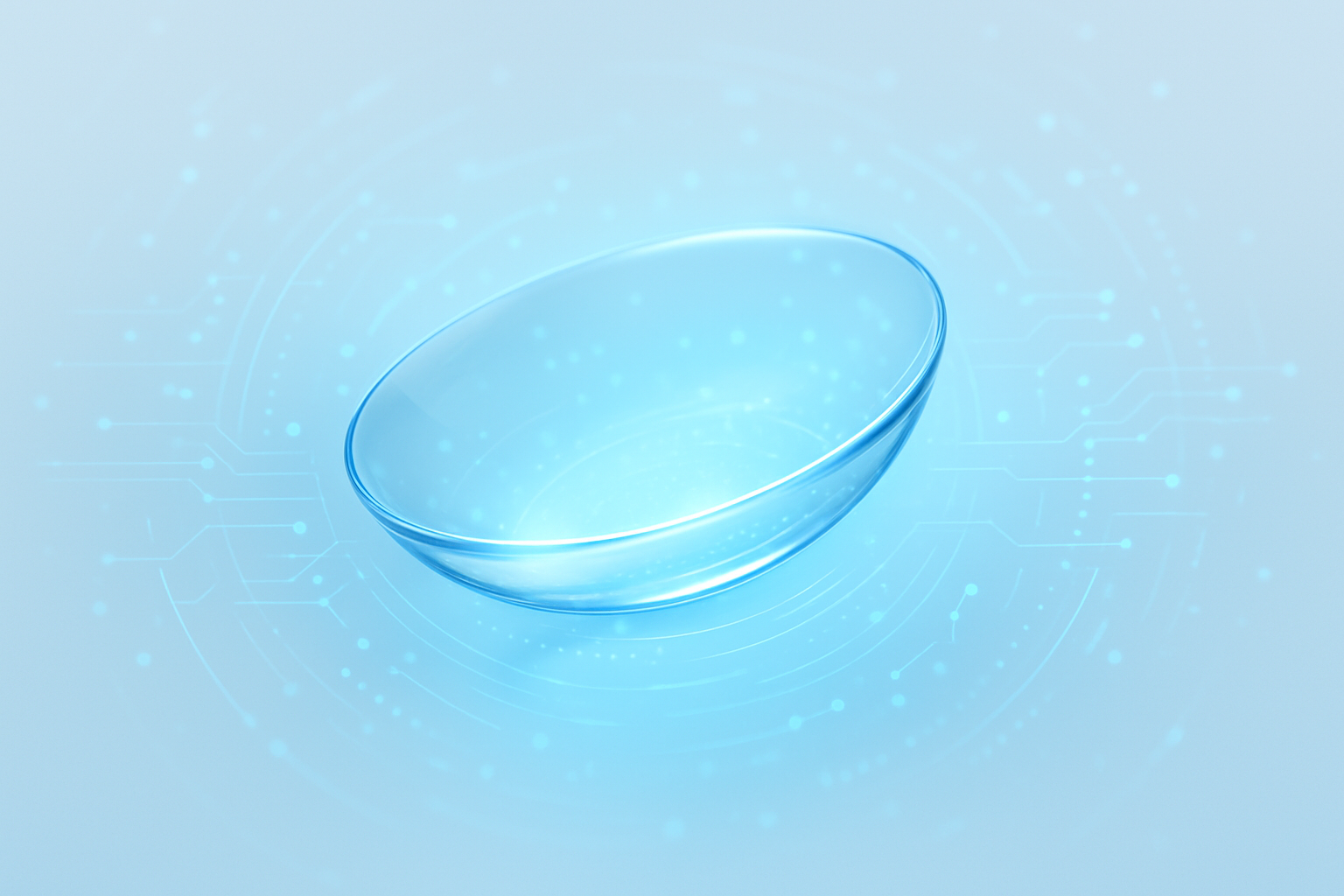
One of the most fascinating developments is smart contact lenses, which integrate invisible electronic sensors and microchips. These lenses not only correct vision problems, but can also:
-
Measure glucose in tears to help patients with diabetes.
-
Monitor intraocular pressure in people at risk of glaucoma.
-
Integrate with augmented reality, projecting information directly into the user's vision.
Although many of these projects are in the testing phase, technology and pharmaceutical companies are already investing millions in their development.
More breathable and comfortable materials
Comfort remains one of the main concerns for users. Therefore, research is focused on new materials that:
-
Allow greater ocular oxygenation.
-
Maintain hydration for more hours.
-
Reduce the accumulation of deposits on the surface.
Examples include polymers with better water retention or the incorporation of molecules like hyaluronic acid into the lens structure.
Therapeutic contact lenses: medicine in your eyes
Another line of research is the development of therapeutic contact lenses, capable of delivering drugs in a controlled manner directly to the eye. This could revolutionize the treatment of diseases such as:
-
Severe dry eye.
-
Glaucoma.
-
Eye infections or inflammations.
The great benefit would be to maintain stable levels of medication on the ocular surface, reducing the need to apply eye drops several times a day.
Towards more sustainable contact lenses
The environmental impact of contact lenses is also a concern. With millions of users worldwide, the production of blisters and plastic packaging is considerable. Therefore, the following are being explored:
-
Biodegradable materials for lenses and packaging.
-
Blister recycling programs in pharmacies.
-
More efficient production with a smaller carbon footprint.
In the near future, contact lenses could be not only more comfortable, but also more respectful of the planet.
Conclusion
The future of contact lenses goes far beyond improving vision. Lenses that hydrate, release medication, and respect the environment.
Technology is advancing rapidly, and we will soon see how the boundary between health, comfort, and new experiences blurs. What is innovation today will be part of our daily routine tomorrow.



Leave a comment
This site is protected by hCaptcha and the hCaptcha Privacy Policy and Terms of Service apply.