
Guide to daily contact lenses for myopia
If you've been looking for a daily contact lens guide for myopia, you probably don't want a lot of theoretical information. You want to know which ones are right for you, what to look for before buying, and how to avoid mistakes that will later affect your wallet and, above all, your comfort. That makes sense. Daily contact lenses work very well for those seeking practicality, hygiene, and a fuss-free routine, but not all feel the same or fit every eye in the same way.
The good news is that choosing well doesn't have to be complicated. When you know which parameters truly matter, the decision becomes much easier. And that's where it pays to get practical: correct prescription, hydration, wearing time, ocular sensitivity, and realistic repurchase budget.
Daily contact lens guide for myopia: what to look at first
The first step is to confirm that you need spherical contact lenses to correct myopia. These are the most common when the visual problem is blurred distance vision and there is no astigmatism requiring a different geometry. It seems basic, but many purchases fail by assuming that any prescription contact lens works the same.
Next, your prescription comes into play. For contact lenses, it doesn't always exactly match your glasses prescription, especially when myopia is higher. That's why the valid reference is the contact lens prescription. If you already have it, perfect. If not, it's advisable to review it before changing brands or types of contact lenses.
How your days are also matters. Someone who wears contact lenses occasionally for work outside the home or going out does not have the same needs as someone who spends ten hours in front of screens, with heating, air conditioning, or dry environments. On paper, two daily contact lenses might seem similar. In the eye, the difference can be clear by mid-afternoon.
Why daily contact lenses usually fit well for myopia
The main advantage is simplicity. You put on a clean pair every day and throw them away at the end. This significantly reduces maintenance, avoids relying on solutions, and eliminates some of the problems related to poor cleaning or overuse beyond the recommended time.
For many people with myopia, they are also a very comfortable option if they are looking for flexibility. They work well for both daily and intermittent use. If there are weeks where you only wear them a few days, you're not paying the maintenance cost of a monthly lens or forcing yourself to follow an impractical replacement schedule.
However, they are not always the cheapest option per unit. If you wear contact lenses every day of the month, a monthly lens might seem more economical at first glance. The key is to calculate the full cost, including solutions, case, and margin of error when a monthly lens gets dirty, causes discomfort, or ends up lasting less than expected. In many cases, daily lenses compensate for comfort and hygiene.
Which daily contact lenses for myopia to choose according to your routine
This is where a daily contact lens guide for myopia truly comes in handy. It's not just about "the best," but about the ones that fit you best.
If you prioritize comfort from morning to night, look at materials and technologies focused on retaining hydration. This is especially noticeable if you work long hours in front of a computer or if you often end the day with tired eyes. In these cases, a lens designed to better maintain moisture usually makes a difference.
If your eyes are sensitive or tend to dry out, look for ranges designed for dry eyes. It's not just marketing. Some users tolerate almost any contact lens well, while others need an extra boost of hydration to avoid tightness, grittiness, or less stable vision throughout the day. If you identify with this second profile, it's worth prioritizing comfort over saving a few euros per box.
If you need many hours of wear, pay attention to oxygen transmissibility. A contact lens that allows good oxygenation usually offers a more natural feeling during long days. This does not mean wearing it longer than recommended or sleeping with it if not indicated, but it can help you feel better at the end of the day.
And if what you want is easy and hassle-free replenishment, consider convenient purchasing formats, economy packs, and availability both online and at the pharmacy. For a recurring product, the best contact lens is not only the one that works well today, but the one you can reorder effortlessly next month.
Prescription, curve, and diameter: what not to improvise
Myopia is corrected with negative diopters, but choosing contact lenses isn't just about putting "minus two" or "minus three" in a filter. The base curve and diameter also influence how the lens sits on the eye. And although many people use standard parameters without problems, changing brands can imply small differences in fit and feel.
That's why it's not a good idea to buy on impulse just because an offer seems attractive. If a contact lens is too loose or too tight, comfort decreases and the experience worsens, even if the prescription is correct. If you already use ones that work for you, taking that as a reference is the best starting point.
It's also worth remembering that a comfortable contact lens when you put it on won't always be the most comfortable eight hours later. The real test is in everyday use: screens, street, air conditioning, reduced blinking, and work pace. All of that matters more than the first five-minute impression.
If you have dry eyes, this part matters more than it seems
Many myopic users stop wearing contact lenses not because of their prescription, but because of dryness. It starts as a minor discomfort and ends up becoming an uncomfortable routine. If this happens to you, it doesn't mean that daily contact lenses aren't for you. It means you need to choose better.
For dry eyes, a daily contact lens with a good balance between hydration and oxygenation usually works better. Sometimes it's thought that the more water a lens has, the better it will always be, and that's not necessarily true. It depends on the material, the environment, and the eye itself. There are cases where a lens specifically designed to maintain comfort in dry environments yields better results than one with impressive figures on paper.
It also helps to review habits. Blinking less in front of screens, extending wear beyond what's recommended, or putting on contact lenses when the eye is already irritated are common mistakes. The correct contact lens greatly improves the experience, but routine also plays a role.
Common mistakes when buying daily contact lenses for myopia
The first is to only think about the price per box. Cost matters, of course, but if a cheap contact lens forces you to remove it earlier, constantly use artificial tears, or alternate it with glasses because you can't tolerate it, the purchase ceases to be so cost-effective.
The second mistake is to change products without considering your actual needs. Sometimes a basic option is chosen when contact lenses are actually worn for long periods or in environments that are very harsh on the eyes. Or vice versa: an advanced range is overpaid for when use is sporadic and its advantages are not utilized.
The third is buying too late. When you run out of your last box, you end up hurriedly choosing whatever is available. In a replenishment category, anticipating simplifies things a lot. Having a convenient online channel and, at the same time, the peace of mind of finding the brand at the pharmacy can save you more than one predicament.
How to make a successful purchase without complications
Start with a simple question: do you want maximum comfort, the best solution for dry eyes, or a balanced option for everyday use? That answer will put you quite close to the right contact lens.
Then, review your exact parameters and compare them carefully. If you already wear contact lenses and are happy, don't change for the sake of changing. If you're not comfortable, identify the specific problem. Noticing dryness at the end of the day is not the same as unstable vision, a foreign body sensation, or poor tolerance from the start. Each symptom points to a different need.
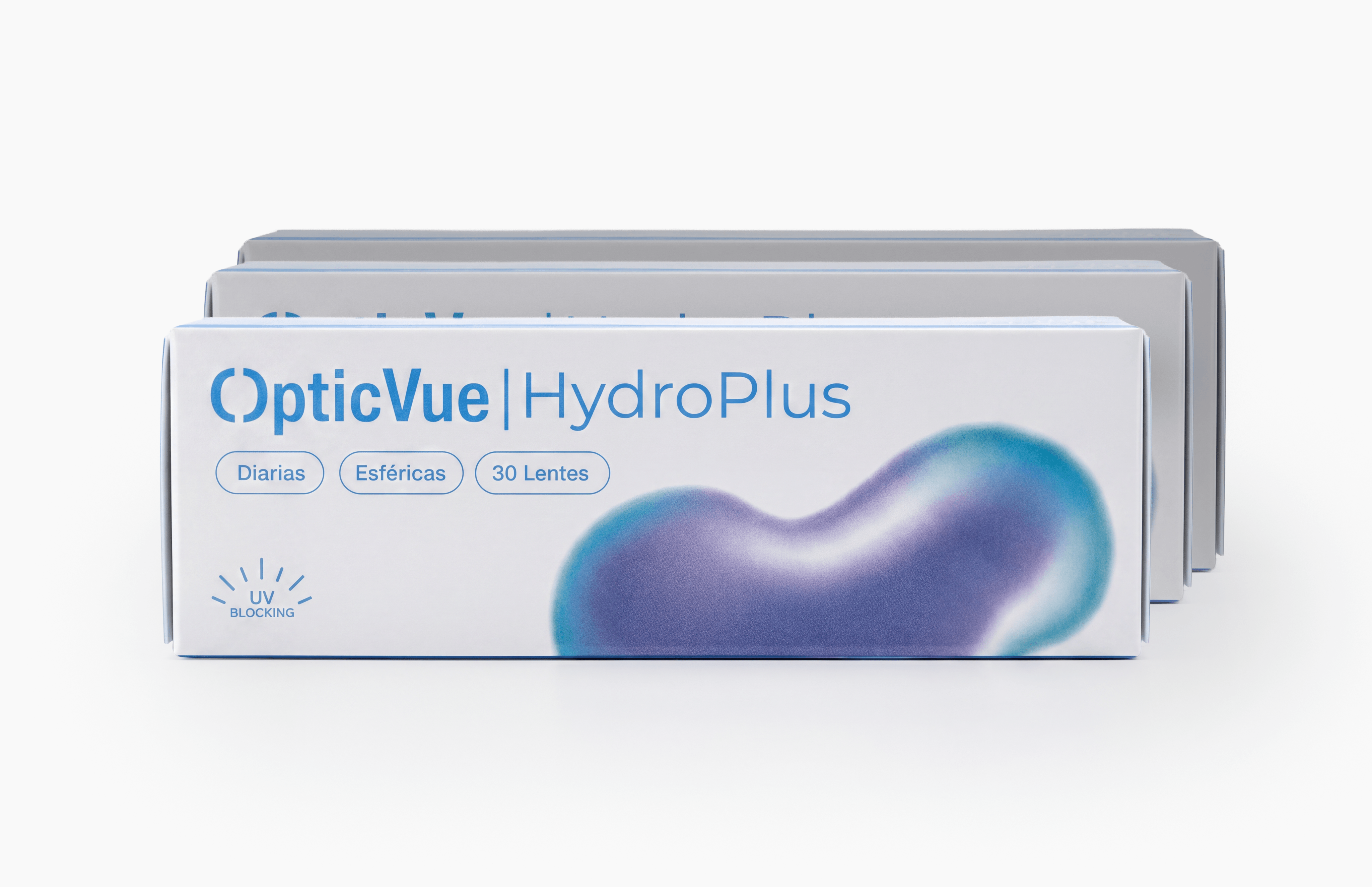
And finally, think about repurchase. A good experience doesn't end with choosing the correct lens. Being able to reorder quickly, receive it in a short time, and have a trusted physical alternative if you need it also counts. This is where proposals like OpticVue are convenient for a practical user: they simplify online shopping without losing the support of the pharmacy channel.
Questions worth asking yourself before deciding
If you only wear contact lenses a few days, daily lenses usually win for convenience. If you wear them every day for many hours, a daily lens is still worth considering if you prioritize hygiene, comfort, and zero maintenance. If you have dry eyes, it's best not to choose blindly based on price. And if a brand works well for you, changing just for a promotion is rarely the best move.
The right decision is not always the cheapest or the most advanced. It's the one that fits your eyes and your real routine. When you find that combination, contact lenses stop being something to think about and start doing exactly what you expect of them: helping you see well without making your day more difficult.
If you are comparing options, remember this idea: for myopia, good daily contact lenses are not chosen by generic promises, but by how they perform for you every morning, every screen, and every hour of wear.

Leave a comment
This site is protected by hCaptcha and the hCaptcha Privacy Policy and Terms of Service apply.