
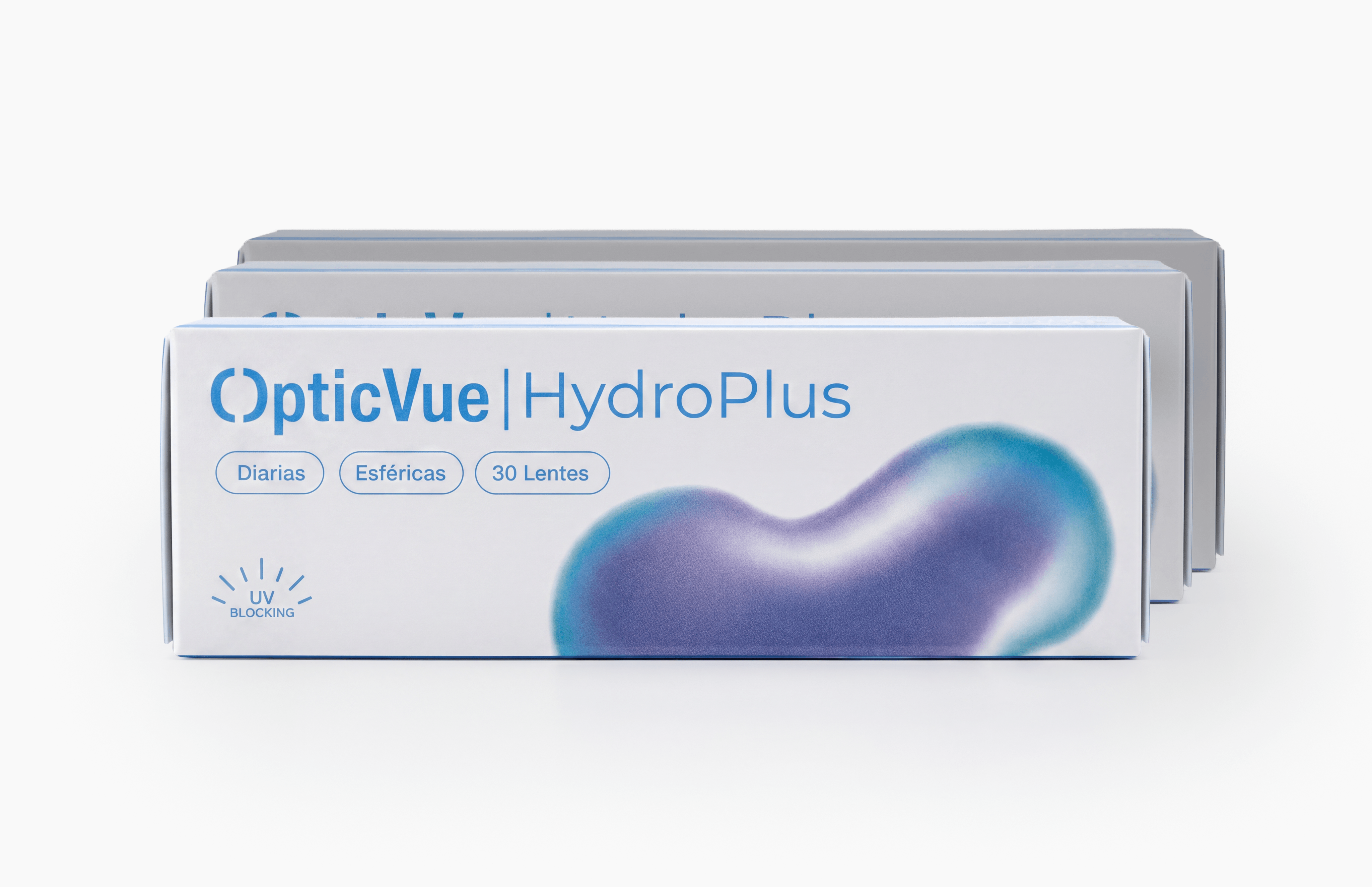
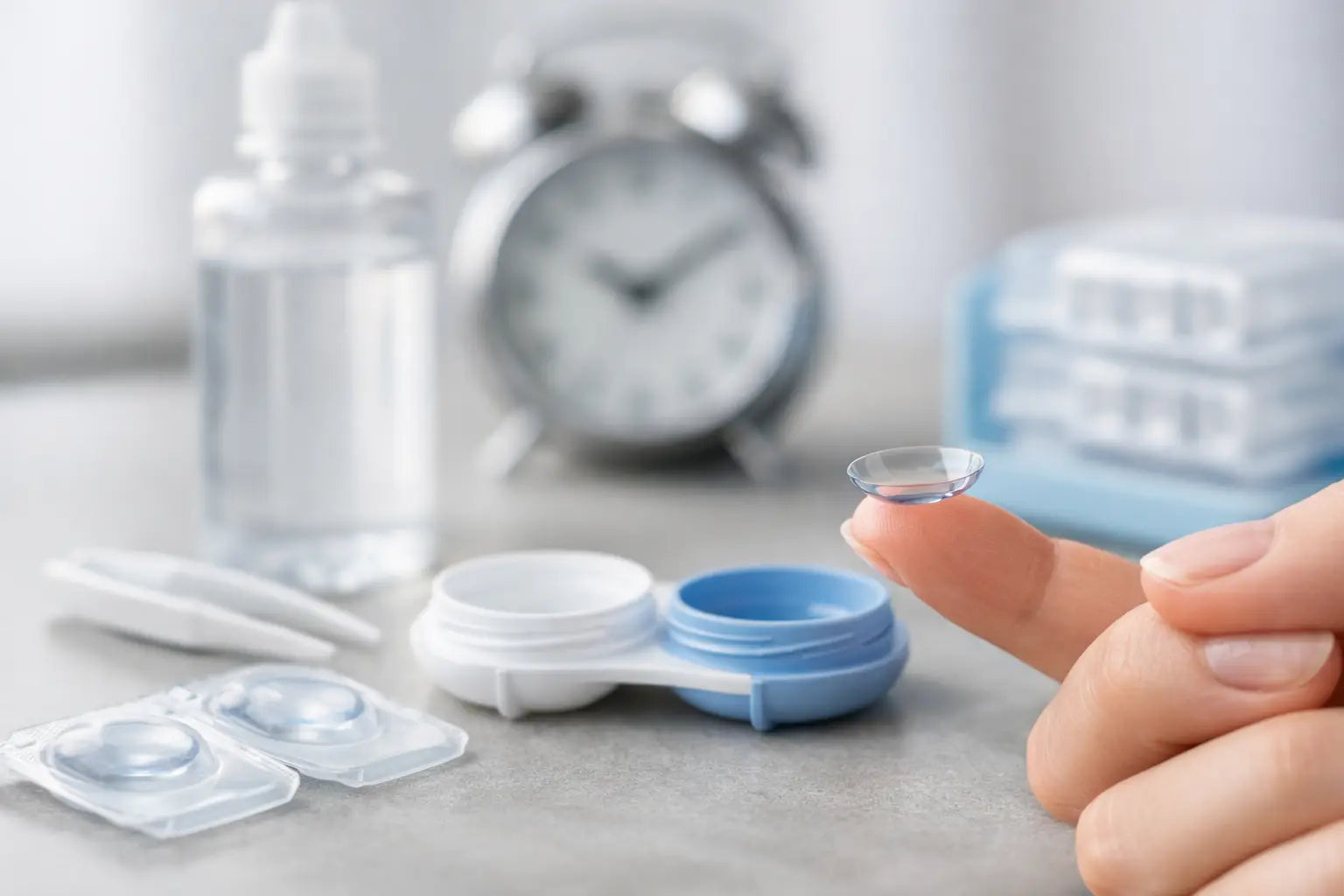
How often to change monthly contact lenses
There's a question that comes up much more often than it seems: how often to change monthly contact lenses if they still look good, don't bother you, and there are still "days of use" left in the case. The short answer is simple: they are changed every 30 days from when you open the blister pack and put them on for the first time. Not when they start to bother you, not when they "look new," and not when you remember.
That timeframe is not arbitrary. It's set so that the contact lens material maintains its performance in terms of hydration, oxygenation, and comfort. Even if you clean them well and use them for only a few hours, a monthly contact lens is designed to function for a specific cycle. After that time, the risk of deposits, dryness, irritation, and worse tolerance at the end of the day increases.
How often to really change monthly contact lenses
When we talk about monthly contact lenses, the general rule is clear: 30 days from opening. It doesn't matter if you use them every day or only occasionally. The counter starts when they leave the sterile packaging and come into contact with your eye and the maintenance solution.
This is where confusion often arises. Many people interpret "monthly" as 30 uses. But it doesn't mean that. It means one calendar month of useful life from the first use. If you only wear them Monday to Friday or only for going out, their duration is not automatically extended. The material continues to age and accumulate residue, even if it spends more time in the lens case than in your eye.
There's an apparent exception that needs clarification: some lenses are prepared for specific, even extended, wear regimens, but this does not change the replacement schedule unless your specialist has given you specific instructions. If your box says monthly, it's prudent to respect that cycle without improvising.
Why you shouldn't try to extend the life of monthly contact lenses
Most users don't push their luck due to carelessness, but rather for a very human reason: if the contact lens still focuses and doesn't hurt, it seems like it can last a few more days. The problem is that wear and tear isn't always immediately noticeable.
As the days pass, the surface of the contact lens accumulates proteins, lipids, environmental debris, and minor alterations that cleaning doesn't remove 100%. This can lead to several changes. Sometimes you notice more dryness late in the afternoon. Other times you see a little worse, blink more, or feel the contact lens "more present." And in some cases, there's no clear discomfort, but there is less oxygen and a higher risk of irritation.
Your eye type also plays a big role. If you tend to have dry eyes, allergies, work many hours with screens, or spend time in air conditioning, it's normal for the comfort limit to be reached sooner. In these cases, adhering to the schedule is even more important.
Signs you should change them before the month is up
Although the reference is 30 days, you don't always have to wait for the deadline. If a contact lens causes problems, it should be changed sooner. It's not worth forcing it.
If you notice itching, stinging, less sharp vision, a feeling of dirtiness, redness, or persistent discomfort, that contact lens is no longer performing as it should. It should also be discarded if it's broken, deformed, or has been poorly stored. Being cheap can be costly when it comes to eye health.
And there's something important: if one eye is uncomfortable and the other isn't, don't assume it's "just tiredness." Sometimes the problem is with a single contact lens. Changing it and observing how the eye responds usually clears up any doubts quickly.
What happens if you use monthly lenses longer than recommended
Extending use for a few days may seem harmless, but it comes with a cost. The first is usually comfort. The older the contact lens, the more likely it is to dry out sooner, get dirty easily, and make you aware that you're wearing it.
The second cost is visual quality. A contact lens with deposits or an altered surface may still correct vision, but it won't offer the same clarity or stability when blinking. That visual fatigue you feel at the end of the day isn't always due to the screen.
And the third point, which is the most serious, is the risk to the eye. Forcing the replacement time can lead to irritations and intolerances. There's no need to dramatize, but it's important to be clear: respecting the change frequency is one of the simplest ways to prevent problems.
How often to change monthly contact lenses if you don't use them daily
This is one of the most common questions among those who alternate between glasses and contact lenses. If you only wear them a few days a week, the recommendation remains the same: one month from opening.
It makes sense to think that if you've used them ten times, they should last longer. But monthly contact lenses don't work like a usage pass. Once opened, they begin to experience the wear and tear of use, handling, and storage.
If your contact lens use is truly occasional, you might want to consider if the monthly format is the most practical for you. For some people, it's worth it for the price; for others, daily lenses fit better because they simplify the routine and avoid worrying about maintenance. It depends on the frequency of use, how well you tolerate contact lenses, and whether you're looking for maximum comfort or per-unit savings.
How to prolong comfort without prolonging the deadline
It's one thing to take better care of your contact lenses, and quite another to try to make them last longer than recommended. The former is definitely worthwhile.
Wash and dry your hands thoroughly before handling them. Clean them with the appropriate solution if your model requires it, always renew the solution in the lens case, and do not use water to rinse or store them. It seems basic, but many problems start right there.
It's also advisable to change the case regularly and not sleep with them unless your specialist has explicitly indicated it and the model is designed for it. Sleeping with contact lenses not prepared for that use multiplies the chances of ending up with irritated eyes the next day.
If you notice frequent dryness, review the type of contact lens and your daily routine. Sometimes it's not that you're using them incorrectly, but that you need a more hydrating material or an option designed for dry eyes. Choosing well from the start makes it easier to meet the change schedule without cutting it close at the end of each month.
How to remember when to change them
The main reason many people go over the deadline is not an intention to save money, but simply forgetfulness. Between work, errands, and routine, it's easy to lose track.
The most practical thing is to set an exact date on the day you open the blister pack. You can write it down on your phone, on a note in the bathroom, or set a monthly reminder. If you open your contact lenses on the 8th, you know that the next 8th it's time to start a new pair.
It also helps to have replacements at home so you don't fall into the "I'll stretch them for another week because I don't have any left" trap. For a recurring product like this, anticipating avoids rushing and ill-advised decisions. That's why many people prefer to organize their replenishment in advance, either online or at the pharmacy, and forget about the problem.
When you should review your contact lens choice
If you reach the end of the month with discomfort almost every time, it's not always solved by simply changing them earlier. The contact lens might not be the most suitable for your eye or your lifestyle.
For example, someone who spends many hours in front of a computer tends to blink less and notices dryness sooner. Someone with more unstable tears might need a material that better retains hydration. And someone looking for total practicality might be more comfortable with another format. It's not just a matter of prescription, but of real everyday comfort.
That's why it's worth paying attention to how you end the day, not just how you start it. A contact lens that works well for two hours but poorly for eight is not a good solution.
The easy rule for not failing
If you want to take away just one idea, let it be this: monthly contact lenses are changed every 30 days from opening, even if they seem fine. If they bother you sooner, change them sooner. And if you use them sporadically, the deadline does not pause.
For a recurring purchase like this, simplifying the routine helps a lot. Being clear about when to replace them, having a spare on hand, and choosing an option that is truly comfortable makes taking care of your eyes easier and less negotiable. If your contact lenses accompany you every day, it's worth treating them as what they are: an essential part of your visual health, not an accessory to be stretched until the last day.

Leave a comment
This site is protected by hCaptcha and the hCaptcha Privacy Policy and Terms of Service apply.