
How to tell if you have dry eyes for contact lenses
You put in your contact lenses in the morning, and by mid-afternoon, you feel stinging, your vision is blurry, or you want to take them out as soon as possible. If you're wondering how to tell if you have dry eyes for contact lenses, the answer isn't just noticing dry eyes "sometimes," but identifying a clear pattern of discomfort, when it appears, and what type of lens you're using.
Dry eyes and contact lenses don't always get along, but that doesn't mean you have to give up using them. Many times, the problem isn't wearing contact lenses themselves, but using a material that doesn't suit you, wearing them for too long, or choosing a format that isn't suitable for your routine. Detecting it early makes the difference between enduring discomfort every day or finding a more comfortable option.
How to tell if you have dry eyes for contact lenses: common signs
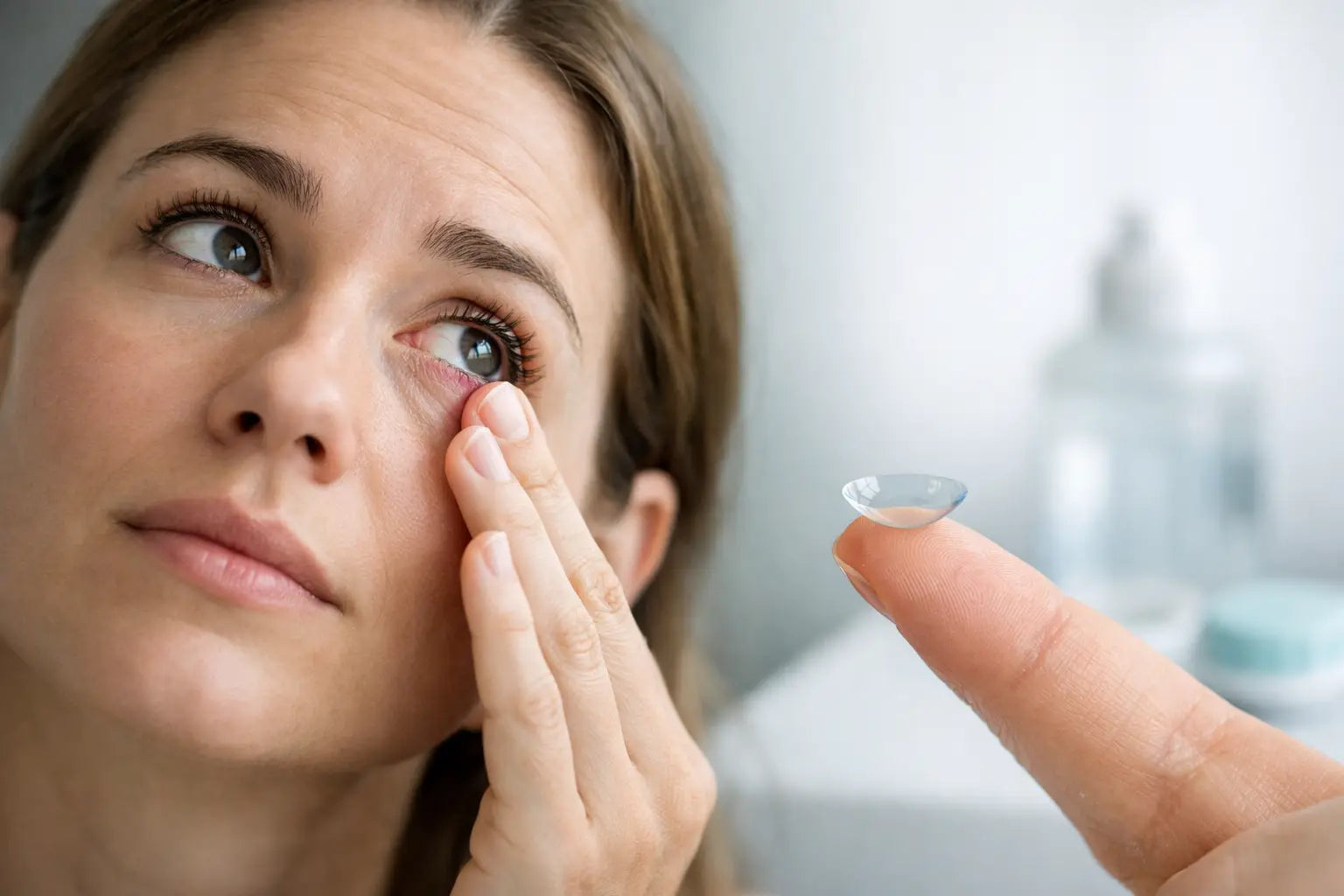
There are several symptoms that tend to recur when the eye doesn't maintain sufficient hydration while wearing contact lenses. The first is a gritty or foreign body sensation, as if you have something in your eye even if the contact lens is properly placed. Stinging, mild itching, or burning at the end of the day are also common.
Another very frequent sign is fluctuating vision. You don't always see poorly constantly, but at times you notice the image is somewhat blurry, and blinking improves it for a few seconds. This usually indicates that the tear film is not stable on the ocular surface and on the contact lens itself.
It's also worth noting your tolerance to use. If you used to be able to wear contact lenses for eight or ten hours and now they feel uncomfortable after five or six, that's a clear clue. The same applies if you feel immediate relief when you take them out or if you need to use artificial tears too frequently to get through the day.
Dry eyes don't always manifest solely as "lack of tears." Sometimes the eye waters more than normal. It seems contradictory, but it happens because the eye becomes irritated and responds by producing poor-quality tears, less effective at maintaining stable hydration. If your eyes water and at the same time feel dry with contact lenses, don't rule it out.
What you can observe at home before seeking a review
You don't need to play specialist, but you can pay attention to some very useful details. If the discomfort appears just when you put in the contact lens, there may be previous irritation, dirt, poor maintenance, or incompatibility with the solution you're using. If it appears several hours later, it usually points more to dryness due to evaporation, excessive wear time, or a material that isn't hydrating enough.
The context also matters a lot. If you work with screens, spend time in air conditioning, drive a lot, or are in dry environments, it's easier for your eyes to suffer. We blink less in front of the computer, which worsens comfort. Some people feel reasonably well outdoors and terrible in the office. That contrast says a lot.
Another key detail is whether the discomfort occurs with any contact lens or only with a specific type. Daily and monthly lenses behave differently, and not all materials are the same. If you notice a clear improvement with new contact lenses, it wasn't "just your eyes": there was probably a mismatch between your needs and the product you were using.
Why some contact lenses worsen the sensation of dryness
Not all contact lenses retain hydration equally or allow the same oxygen flow. That's why two users with the same prescription can have very different experiences. The material, water content, and design greatly influence actual comfort, especially at the end of the day.
Monthly lenses can work very well if cared for correctly, but they require an impeccable cleaning and replacement routine. If they are used for too long or poorly maintained, they tend to accumulate deposits, which can increase irritation. Daily lenses, on the other hand, are often a more comfortable option for people with dryness, allergies, or long days, because you start with a fresh lens every day and reduce accumulated residue.
There are also cases where the user needs a lens specifically designed to improve hydration or promote more comfortable use for longer hours. Here, it's not advisable to choose based solely on price or habit. When the eye shows signs, the practical thing to do is to look for a lens that addresses that specific need.
Factors that increase the risk of dry eyes with contact lenses
Dryness does not appear for a single reason. It is usually the sum of several small factors. Age influences, as do certain hormonal changes, some medications, intensive screen use, or environments with heating and air conditioning. Sleeping little and spending many hours without resting your eyes also doesn't help.
Makeup, poor hand or case hygiene, and sleeping with contact lenses when they are not designed for it are quite common mistakes. Sometimes the contact lens is not "bad," but daily use is not optimal. And of course, the eye ends up complaining.
If you already have a tendency to dry eyes without contact lenses, using them can make the problem more evident. It doesn't mean you can't wear them, but it probably means you'll need a more careful adaptation and a more refined choice.
When discomfort stops being normal
A little sensation when putting in a contact lens can happen occasionally. What you shouldn't normalize is frequent stinging, daily discomfort, or the need to take them out much earlier than expected. Nor should you continue to use them if you notice persistent redness, pain, intense light sensitivity, or sustained blurry vision.
When discomfort is repeated, it's not advisable to just put up with it or randomly switch contact lenses. The problem could be dryness, but also poor fit, deposits, allergies, blepharitis, or irritation that requires professional evaluation. If your eye gets very red or hurts, get it checked as soon as possible.
What to do if you think you have dry eyes for contact lenses
The first useful measure is very simple: reduce wear time for a few days and observe if your eye improves. If it clearly improves, you already have a clue that your tolerance is at its limit. It also helps to rest one or two days with glasses if you've been on a long streak of use.
Next, check the basics. Change your contact lenses when due, don't extend their use "because they still last," respect the cleaning if they are monthly, and avoid sleeping with them unless they are designed for that use and you have been advised to do so. It seems obvious, but many problems stem from this.
If you use screens daily, taking breaks and blinking more consciously improves things more than it seems. It's not a miraculous trick, but it significantly reduces tear evaporation. And if the environment is very dry, it's advisable to avoid direct drafts of air on your face.
In many cases, the significant change lies in the type of contact lens. If you have a tendency to dryness, you might be interested in a daily option or a range formulated to provide more comfort and hydration. At this point, it is worth being guided by a clear and easy-to-compare proposal, instead of trying things haphazardly.
Which contact lenses usually fit better if you have dry eyes
It depends on the intensity of the discomfort and your routine. If you spend many hours away from home, value comfort, and don't want to complicate yourself with maintenance, daily lenses usually make it easy. They are practical, hygienic, and for many users feel better at the end of the day.
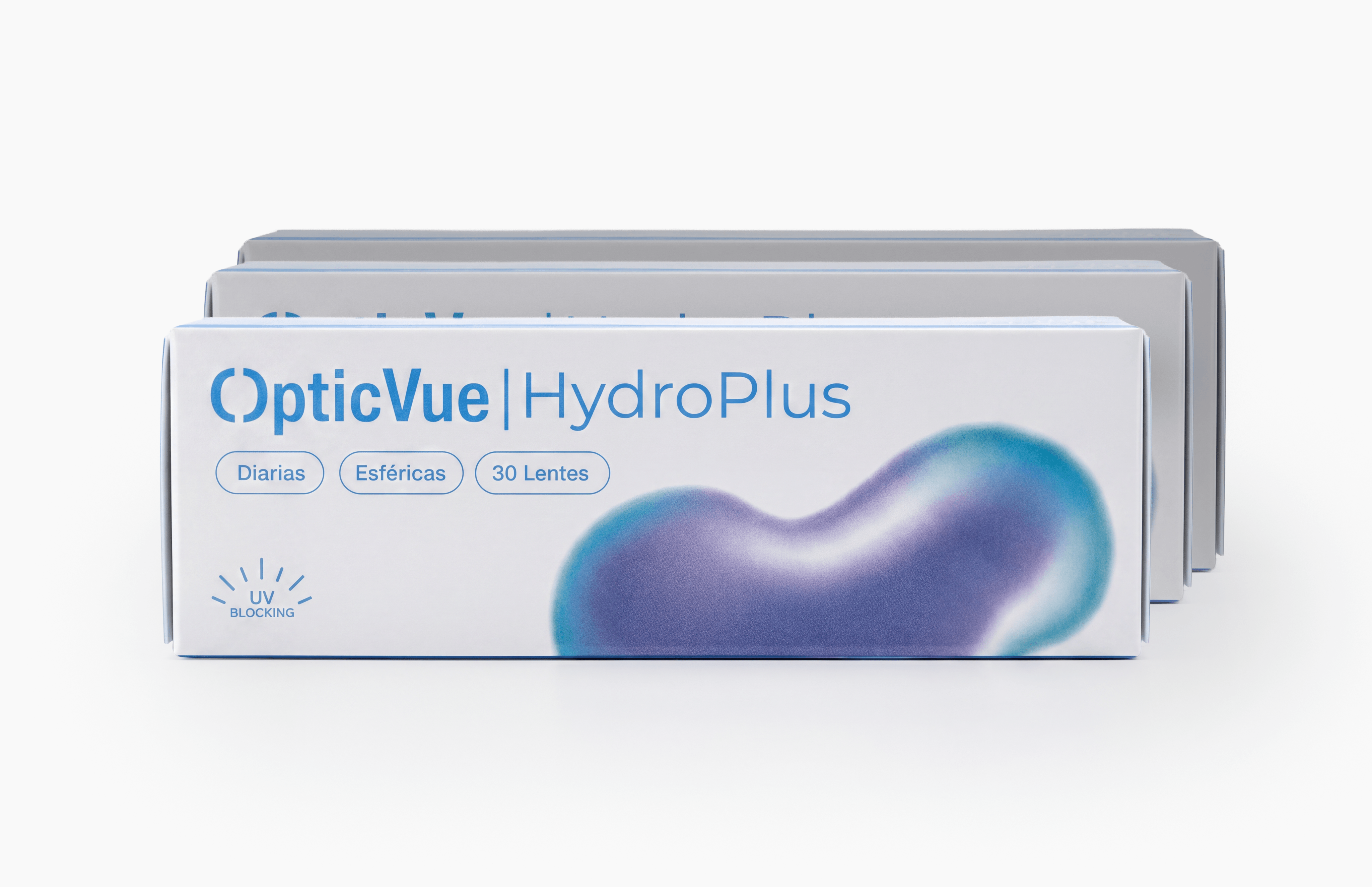
If you prefer monthly lenses out of habit or budget, then choosing the material well and being very consistent with cleaning is even more important. Using a lens focused on dry eyes can also help. In a brand like OpticVue, for example, a specific hydration range makes sense precisely for those who notice that tightness or repeated discomfort and want a solution more adjusted to their daily life.
The key is not to use "the most famous contact lens" or the cheapest, but the one that allows you to get to the end of the day without thinking about taking it out every two hours.
How to know if I have dry eyes for contact lenses or if it's another problem
There are nuances here. If the discomfort appears mostly at the end of the day, improves with blinking, worsens with screens or air conditioning, and you feel relief when you take out your contact lenses, dryness is a quite reasonable suspicion. If it also happens frequently, even more so.
But if your eye is very itchy, there's discharge, more noticeable redness, or the discomfort is centered in only one eye, there might be something more than just dryness. The same applies if a contact lens you always tolerated suddenly becomes unbearable. That's why it's good not to self-diagnose too much: observe, yes; improvise, no.
Sometimes the solution is as direct as switching from a daily contact lens to a more hydrating option, and other times it involves re-evaluating the eye, the prescription, or the wearing habits. The important thing is not to think that suffering with contact lenses is part of the deal.
If you've been noticing for days that your contact lenses tire you out sooner, rub more, or are no longer as comfortable as before, listen to it. Your eyes usually give plenty of warning before the problem gets worse, and when you choose an option that truly adapts to your lifestyle, everything becomes much easier.

Leave a comment
This site is protected by hCaptcha and the hCaptcha Privacy Policy and Terms of Service apply.