
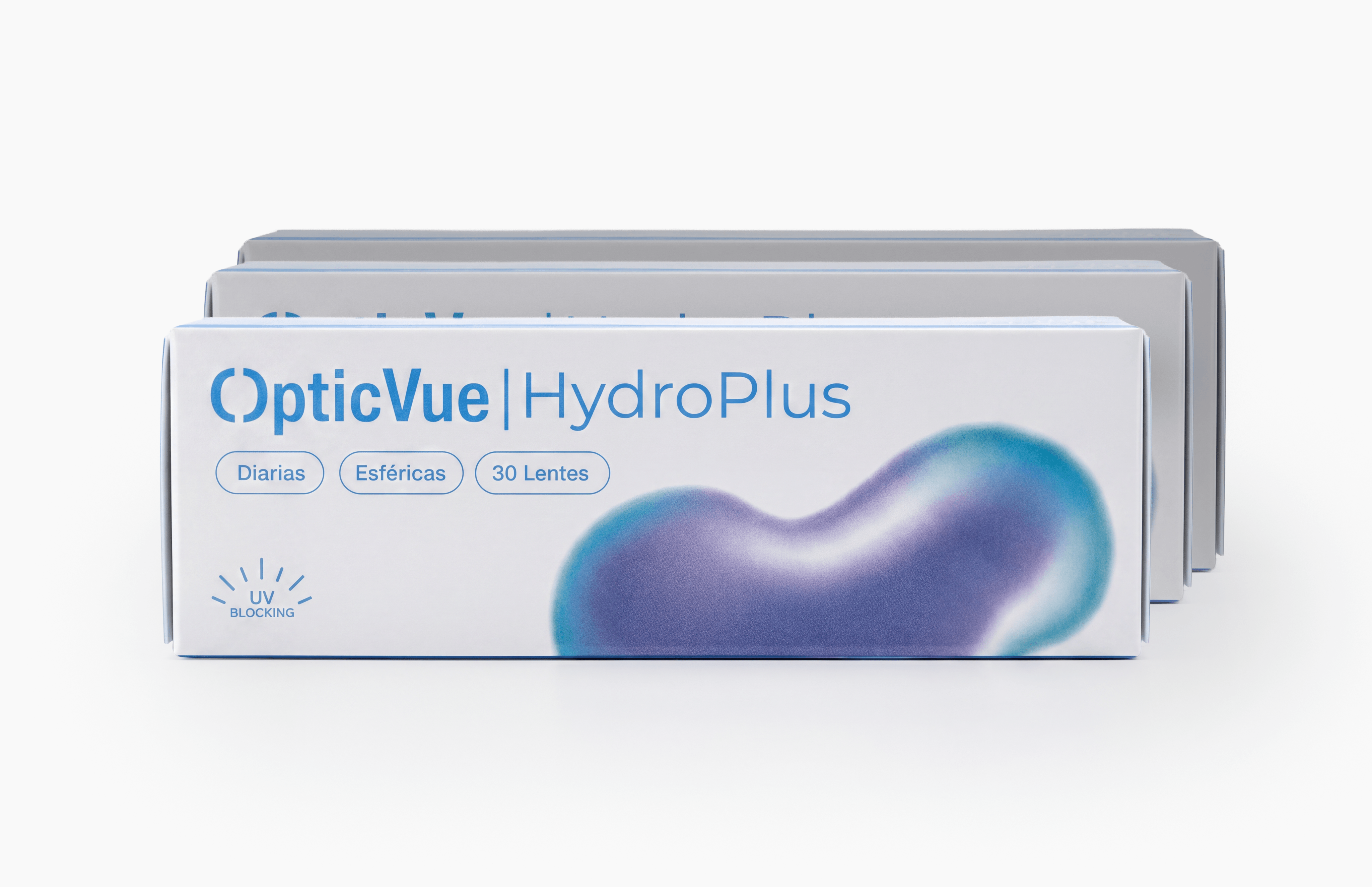

How to use contact lenses for the first time without fear
That moment when you have the contact lens on your fingertip and your eye seems to decide it's not going to cooperate is more common than you think. If you're looking for how to use contact lenses for the first time, the most useful thing isn't to do it perfectly on the first try, but to do it well, calmly, and without forcing your eye.
Starting with contact lenses often raises the same questions: whether they'll hurt, if they'll get stuck, if you'll know how to remove them, or if your eye will feel strange all day. The reality is far less dramatic. With a simple routine and a little practice, most people adapt quickly. What makes the difference is following basic steps and respecting the type of lens you've been prescribed.
How to use contact lenses for the first time step-by-step
Before touching the contact lens, wash your hands thoroughly with soap and water and dry them with a lint-free towel. It seems obvious, but this is where almost everything begins: if your hands aren't clean, discomfort and the risk of irritation increase.
Prepare a well-lit space with a mirror. If you're in a hurry, it's easier to get frustrated. At first, it's advisable to sit down and rest your elbows for more control. Open the blister pack or contact lens case and place the contact lens on the tip of your index finger. It should be bowl-shaped. If the edges open outwards, it's inside out.
With your other hand, hold your upper eyelid to prevent blinking just as you're about to put it in. With the middle finger of the hand holding the contact lens, gently pull down your lower eyelid. Look straight ahead or slightly upwards and gently bring the contact lens closer. When it touches your eye, slowly release, blink a couple of times, and let it settle.
There's no need to "stick" it or press. The contact lens adapts itself to the surface of the eye. If you notice slight tearing at first, that's normal. If there's clear pain, intense stinging, or very blurry vision that doesn't improve in a few seconds, remove it and check if it's inside out, dirty, or damaged.
What it feels like the first few times
The first few insertions are rarely elegant. It might take several attempts, your eye might tear up, and you might feel very aware of the contact lens. That doesn't mean something is wrong. The eye needs a small period of adaptation, especially if you've never used anything on your cornea.
What shouldn't happen is persistent pain, a continuous stinging sensation, or discomfort that worsens with minutes. Nor is it a good sign if your eye becomes very red or if your vision remains blurry after blinking several times. In those cases, it's better to remove it, rest a bit, and try again later with a new contact lens if necessary.
It's also worth adjusting expectations. A well-chosen daily contact lens is usually easier to start with for comfort and hygiene, while a monthly one requires a more rigorous cleaning routine. It's not that one is better for everyone. It depends on your usage, whether you have dry eyes, and how consistent you are with maintenance.
Common mistakes when starting out
The most common mistake is trying to rush. If you try to put it in quickly, your eyelid closes prematurely and you end up touching eyelashes, skin, or the edge of your eye. The second mistake is not checking if the contact lens is right side out. This usually results in immediate discomfort and a foreign body sensation.
Another fairly common mistake is using water to rinse or store them. Contact lenses should never come into contact with tap water, because it can contain microorganisms and also doesn't disinfect them. If you use monthly contact lenses, they should only be cleaned and stored with specific solution.
Sleeping with them when they're not designed for it also causes problems. Even if a brand has high oxygenation options, prolonged use doesn't mean uncontrolled use. If you're just starting, the simpler the routine, the better. And if one day your eye is irritated, dry, or you've spent many hours in front of screens, you might need to reduce the wear time.
How to remove them without stress
Learning how to remove them is often more daunting than putting them in, but it's actually easier once you understand the motion. Again, clean, dry hands. Look up and gently pull down your lower eyelid. With your index finger, slide the contact lens towards the lower white part of your eye. There, gently pinch it between your index finger and thumb and remove it.
Don't try to grab it directly from the center of the cornea if you feel insecure. By displacing it first, the movement becomes more comfortable. If you find it difficult, blink a little beforehand or use compatible lubricating drops if they have been recommended to you. Forcing it never helps.
If you wear daily contact lenses, once removed, they are discarded. If they are monthly, you need to clean and store them correctly in their case with new solution. Reusing solution or "topping it up" is a common bad habit that is not recommended.
How long to wear them at first
It's advisable to be cautious here. Even if you feel fine, it's preferable to gradually increase wearing time during the first few days. Starting with a few hours and seeing how your eye responds usually works better than going from zero to ten hours on the first day.
If you experience dryness in the mid-afternoon, it doesn't always mean the contact lens isn't right for you. Sometimes the problem is environmental: air conditioning, heating, screens, insufficient blinking, or long days. Other times, it is advisable to consider a contact lens with greater hydration or more oxygenation, especially if you tend to have dry eyes.
That's why it's worth choosing an option adapted to your pace. There are people who use contact lenses only for sports or weekends, and others who want them for all-day wear. They don't need the same thing. For a brand like OpticVue, for example, it makes sense to consider whether practical daily lenses or monthly lenses with a more savings-oriented approach suit you better, and whether you need a range designed for dry eyes.
Practical tips to make starting easier
If you can, start on a calm day at home. Don't wear new contact lenses five minutes before going to work or rushing out. Having time reduces tension and allows you to repeat the process without stress.
Always maintain the same order, for example, starting with the right eye. It seems like a minor detail, but it helps a lot to avoid confusion if each eye has a different prescription. It's also worth carrying backup glasses with you during the first few days, in case you need to remove them early.
Avoid applying makeup before inserting them and remove them before removing makeup. This minimizes contact with residues. And if you use hairspray or spray, it's better to apply it before handling the contact lenses and with your eyes closed.
One last tip that saves a lot of trouble: if a contact lens is bothering you, don't try to convince yourself that "it will pass." Remove it, check it, and start over. In vision health, persisting when something is wrong usually doesn't end well.
When to seek help
There's a difference between normal learning discomfort and a warning sign. If intense pain, severe redness, persistent blurred vision, exaggerated light sensitivity, or continuous tearing appears, it's appropriate to stop using them and consult a professional.
It's also advisable to seek a check-up if your contact lenses constantly dry out, if you can't tolerate them for more than a few hours, or if you feel the prescription isn't quite right. Sometimes the problem isn't "using" the contact lenses incorrectly, but rather wearing a type that doesn't suit your eyes or your routine.
Learning how to use contact lenses for the first time isn't about doing everything perfectly, but about gaining confidence without skipping the basics. In a few days, that gesture that seems complicated today usually becomes automatic. And when you find a comfortable contact lens for your daily life, you feel exactly what you should feel: practically nothing.



Leave a comment
This site is protected by hCaptcha and the hCaptcha Privacy Policy and Terms of Service apply.