
Contact lenses with high hydration for dry eyes
Contact lenses with high hydration can make a big difference when you feel stinging at the end of the day, blink more than usual in front of a screen, or feel the lens moving in the afternoon. But choosing them well is not just about looking for the highest water percentage on the package. The material, replacement frequency, and your daily habits also influence how your eyes feel.
If you have myopia or hyperopia and are looking for comfortable contact lenses for many hours, this guide helps you understand what to consider before buying. The idea is simple: find a lens that maintains a good feeling of freshness without complicating your routine.
What do highly hydrated contact lenses offer?
A hydrated contact lens is designed to retain moisture and promote a smoother sensation on the surface of the eye. This is especially useful for those who experience occasional dryness, spend many hours indoors with heating or air conditioning, or alternate screen work with outdoor activities.
The hydration level is usually expressed as a percentage of water in the lens. Generally, a lens with a high water content can feel very pleasant from the first moment. However, that data doesn't tell the whole story. There are modern materials with moderate water percentages that retain moisture very well and offer excellent comfort throughout the day.
Therefore, if a contact lens with a lot of water has been uncomfortable for you in the past, it does not mean that contact lenses are not for you. You may need a different material, a different replacement frequency, or to check if your prescription and parameters are appropriate.
High hydration and oxygenation: two things that should go together
Hydration helps the lens feel comfortable, but the eye also needs to receive oxygen. A good contact lens must balance both needs: retain moisture and allow oxygen to reach the cornea adequately.
This is where the material comes into play. Silicone hydrogel lenses, for example, are characterized by high oxygen permeability. They are a common option for people who wear contact lenses for many hours, although the specific model should always comply with your optician-optometrist's recommendation.
It is not advisable to chase a single number. A lens with 60% water will not automatically be better than one with a lower percentage. Your natural tears, the sensitivity of your eyes, the environment you are in, and the wearing time influence as much as the composition of the lens.
The best choice is the one that allows you to end the day without feeling heaviness, fluctuating vision, or the constant need to use artificial tears. If these symptoms appear frequently, it is a sign to review your fitting.
How to choose highly hydrated contact lenses
Before deciding, always start with your prescription and professional fitting. Prescription contact lenses are not interchangeable just because they correct the same amount of myopia or hyperopia. The diameter, base curve, and material are part of the fit and directly affect comfort.
Then, think about what a normal day is like for you. If you only wear contact lenses occasionally, are looking for maximum comfort, or tend to have dry eyes, daily contact lenses can be a practical alternative. You start with a clean pair every morning and don't need to clean or store them at the end of the day.
If you use contact lenses daily and prefer a recurring use option with a lower unit cost, monthly lenses may suit you better. They require a constant cleaning routine and an appropriate maintenance solution, but they are very comfortable when used and stored correctly.
It is also worth looking at the lens design. Some incorporate technologies aimed at maintaining a moist and stable surface during blinking. It is not about choosing by the trade name, but about evaluating the benefit you need: more comfort in front of screens, good visual stability, or a less dry sensation at the end of the day.
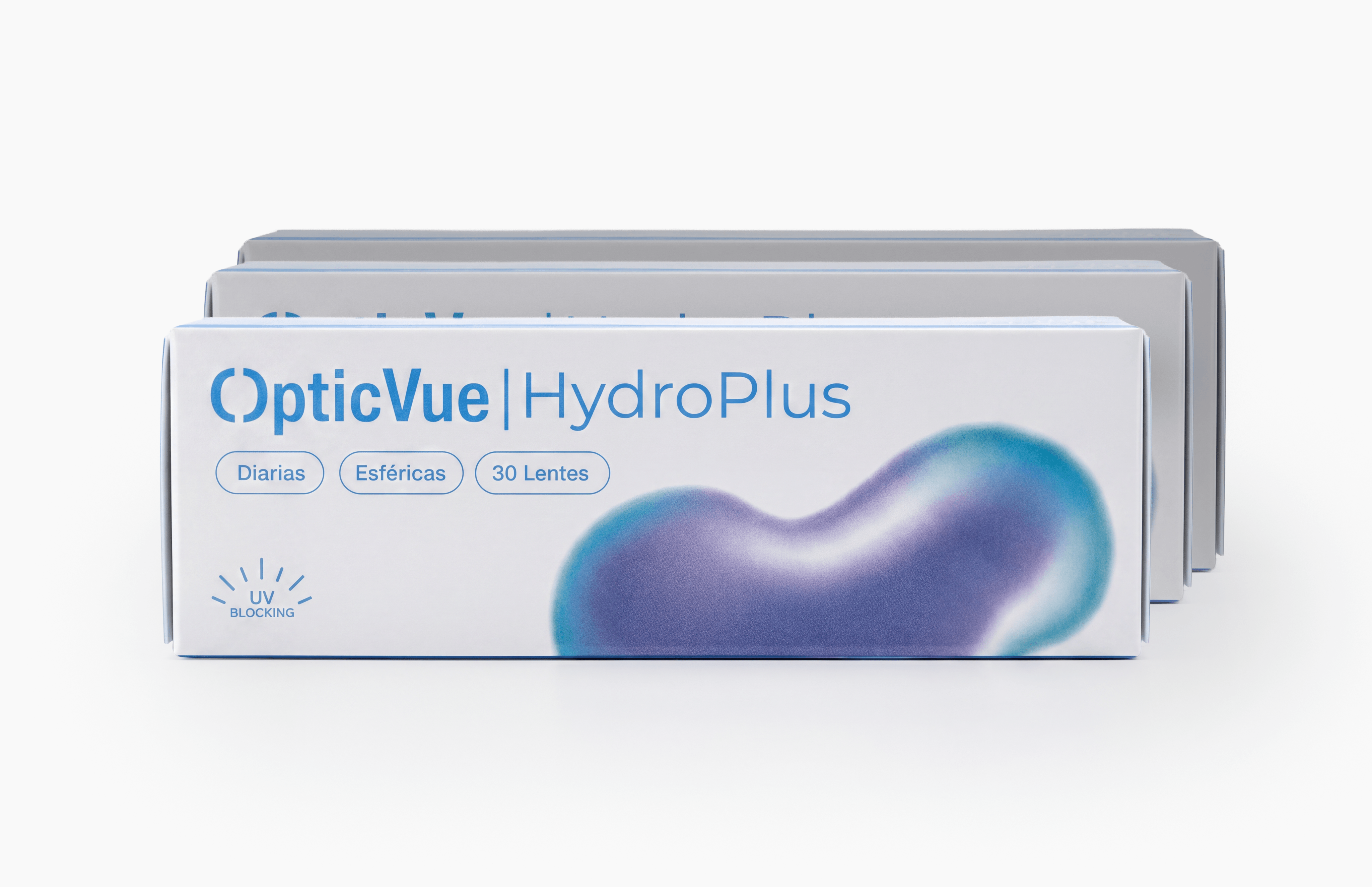
At OpticVue, the HydroPlus range is designed for users who prioritize hydration and comfort in eyes with a tendency to dryness. Even so, a specific range does not replace a professional review: the correct contact lens is the one that respects the parameters you have been prescribed.
Signs that you might need more comfort and hydration
Dryness does not always manifest in the same way. Sometimes it feels like grit, other times like vision that improves with blinking or a lens that seems more present than usual. Tearing can also occur. Although it may seem contradictory, the eye can tear in response to irritation from dryness.
If it happens occasionally after a flight, a long day, or an allergy day, it may be enough to reduce wearing hours and rest with glasses. If it repeats week after week, it is worth consulting a professional before changing brands or increasing the use of drops on your own.
Daily or monthly for dry eyes?
There is no single answer. Daily contact lenses are usually a very comfortable choice for sensitive eyes because you use a new lens every day, without deposits accumulated from previous use. They are especially practical for those who prioritize a quick routine, travel often, or use contact lenses intermittently.
Monthly lenses can work very well if you scrupulously respect their cleaning and replacement. The key point is not to extend their useful life beyond the indicated period, even if they seem to be in good condition. Over time, proteins, lipids, and particles accumulate that can affect comfort and eye health.
Your budget also counts. Dailies imply a more direct cost per use, while monthlies are usually more economical for continuous use. The most cost-effective option is not very useful if it forces you to sacrifice comfort or neglect maintenance.
Habits that help maintain ocular hydration
Even the best contact lenses need good habits. When you work in front of a screen, you blink less and the tear film evaporates more easily. Take regular visual breaks, look into the distance for a few seconds, and remember to blink completely, not just quickly.
Avoid sleeping with contact lenses unless a professional has expressly indicated that the model is designed for it and that you can do so. Do not rinse them with tap water or reuse the maintenance solution. Water is not sterile and may contain harmful microorganisms for the eye.
With monthly lenses, wash and dry your hands thoroughly before handling them. Rub the lens with the recommended solution, even if the product indicates that it does not need rubbing, and change the case regularly. These are small gestures that reduce deposits and help the lens maintain a cleaner feeling.
Artificial tears can be useful at specific times, but they must be compatible with contact lenses. If you need to apply them several times a day to tolerate contact lenses, do not ignore the signal: perhaps your eye needs a check-up or a lens change.
When to remove contact lenses and seek advice
Remove contact lenses immediately if you experience pain, severe redness, light sensitivity, discharge, persistent blurred vision, or a strong foreign body sensation. Do not try to resolve these symptoms by using more liquid, changing the lens multiple times, or waiting for it to pass.
Rest with glasses and consult an optician-optometrist or ophthalmologist. Comfort is important, but eye health comes first. A bothersome lens should not be normalized, even if it worked well for you before.
Choosing comfortable contact lenses starts with listening to your eyes. If you end the day without remembering you are wearing them, you are much closer to having found the right option for your routine.

Leave a comment
This site is protected by hCaptcha and the hCaptcha Privacy Policy and Terms of Service apply.