

Contact lens and solution pack: how to choose wisely
When you run out of contact lenses on a Tuesday night, you're not thinking about theories. You're thinking about something much simpler: solving it quickly, paying a fair price, and not forgetting the solution if you use monthly lenses. That's where a contact lens and solution pack truly makes sense, because it combines replenishment, convenience, and savings in a single purchase.
The beauty of this type of pack isn't just in the price. It also avoids the most common mistake among regular users: buying contact lenses and then realizing that the solution is about to run out. If you use prescription contact lenses for myopia or hyperopia and want a practical purchase, a well-chosen pack saves you steps and gives you more control over your routine.
Why a contact lens and solution pack usually pays off
Buying separately might seem more flexible, but it's not always better. For frequently used products, convenience matters a lot. A pack helps you better anticipate when to replenish and reduces last-minute purchases, which are often the least convenient and, sometimes, the least economical.
There's also an important point about hygiene and consistency. If you use monthly contact lenses, the solution is not a secondary accessory. It's part of daily care. Having it included in the order helps maintain a more organized routine and prevents you from stretching products beyond their recommended use, which is never advisable when it comes to visual health.
For many users, the pack also functions as a savings format. Not because it's always the cheapest option in every case, but because it concentrates what you really need for several weeks or months. If you already know your correct prescription and the type of contact lens you use, repurchasing in a pack is usually a logical choice.
What a good pack should include
Here it's important to get to the point. A good pack isn't just a big box or an eye-catching promotion. It has to fit your actual usage.
If you use daily lenses, the focus should be on the number of lenses and how often you need them. In this case, solution doesn't always come into play, because daily lenses are discarded after each use. Therefore, if you see a pack with solution and you're an exclusive daily user, it probably won't be the most useful option for you.
If you use monthly contact lenses, the scenario changes. There, it makes sense to look for a contact lens and solution pack that combines duration, convenience, and maintenance. Ideally, the amount of solution should be consistent with the number of contact lenses you buy. It's not very useful to get several months' worth of contact lenses if the solution only covers part of that period.
It's also worth looking at hydration and type of use. Someone who wears contact lenses for a few hours a day is not the same as someone who uses them intensively for long periods. For dry or sensitive eyes, choosing a range designed for more comfort can make a significant difference in daily life.
Dailies or monthlies: the pack changes according to your routine
The choice between dailies and monthlies doesn't just depend on the price. It depends on how you live with your contact lenses.
Dailies are the simplest option for those who prioritize immediate convenience. They don't require maintenance, don't require solution, and usually fit very well with people with changing routines, occasional use, or little patience for extra care. They are also a good alternative if you value the feeling of putting on a fresh lens every day.
Monthlies, on the other hand, are usually more appealing to those who use them frequently and want to better adjust the cost per use. They require a correct cleaning routine and, precisely for that reason, it makes sense to buy them along with the solution. In this case, the pack not only simplifies the purchase: it also helps you not to leave out an essential part of the care.
There is no universal answer. If you're looking for zero maintenance, dailies. If you prefer a format designed for continuous use and are comfortable with cleaning, monthlies. The best pack will be the one that suits your actual habit, not the one that looks most attractive on paper.
How to choose a contact lens and solution pack without complicating things
The most practical way to get it right is to review four things: your prescription, the type of contact lens you already tolerate well, your daily wearing time, and whether you experience dryness or eye fatigue. With that, you significantly reduce the margin of error.
If you've been using the same contact lens for a while and it works for you, the most sensible thing is usually to repeat. Changing just for a discount can go wrong if you then experience less comfort. For a recurring purchase, stability matters much more than it seems.
It's also a good idea to calculate how long you want to cover yourself for. Some prefer smaller orders to better control monthly expenses. Others value savings formats because they reduce purchase frequency and avoid running out of stock at home. Neither option is abstractly better. It depends on whether you prioritize initial outlay or medium-term convenience.
If your eyes tend to be dry, it's worth prioritizing materials and ranges focused on hydration. And if you spend long hours in front of screens, even more so. Comfort isn't always noticeable in the first few minutes, but it's very noticeable at the end of the day.
When is it more cost-effective to buy in a pack?
A pack is usually more cost-effective when you already know what you need and are in the replenishment phase. That is, when you are not experimenting with different types of contact lenses, but rather repeating an option that already suits you. In this case, grouped purchasing wins by logic: less time comparing, less risk of forgetting the solution, and, in many cases, a better relationship between quantity and price.
It also pays off if you buy with some foresight. Waiting until the last day rarely helps you choose calmly. In contrast, when you place an order before running out of stock, you can better compare quantities, formats, and promotions without rushing.
There's another detail that's often overlooked: the cost of inconvenience. Having to buy again because you forgot the solution, improvising an emergency solution, or extending the use of lenses longer than recommended ends up being expensive, even if it doesn't always show up on the receipt. A well-planned pack precisely reduces this kind of friction.
Common mistakes when buying contact lenses and solution
The first is to only consider the initial price. A cheap pack may not be worth it if it doesn't fit your usage rhythm or if it includes a solution that doesn't last long enough. The important thing is to look at the complete purchase and how much it truly solves for you.
The second is to buy more quantity than you can comfortably manage. Saving is good, but not at the expense of losing control over your replenishments or having unnecessary accumulated product. For some users, a medium pack is more reasonable than a very large one.
The third is to overlook comfort. If you already know that your eyes are sensitive, that you spend many hours in front of screens, or that you experience dryness at the end of the day, it's not advisable to choose as if all materials were equally good for you. In that case, it is worth prioritizing an option that is better suited to your specific needs.
And the fourth, quite common, is to treat the solution as something secondary. With monthly contact lenses, it is not. It is part of the experience and eye care. Choosing it well influences cleaning, hydration, and daily comfort.
What to consider if you buy online or at a pharmacy
Here, it's not about choosing a winning channel, but the one that best suits you at any given moment. Buying online is usually the quickest way to compare formats, check savings packs, and handle replenishment without having to travel. For many users, that's already half the decision made.
The pharmacy, on the other hand, provides an extra sense of security that still holds a lot of weight in visual health. Being able to find the brand in a healthcare setting gives confidence, especially if you value combining practical purchasing with professional support. That's why an omnichannel model works so well in this category: it doesn't force you to choose between convenience and security.
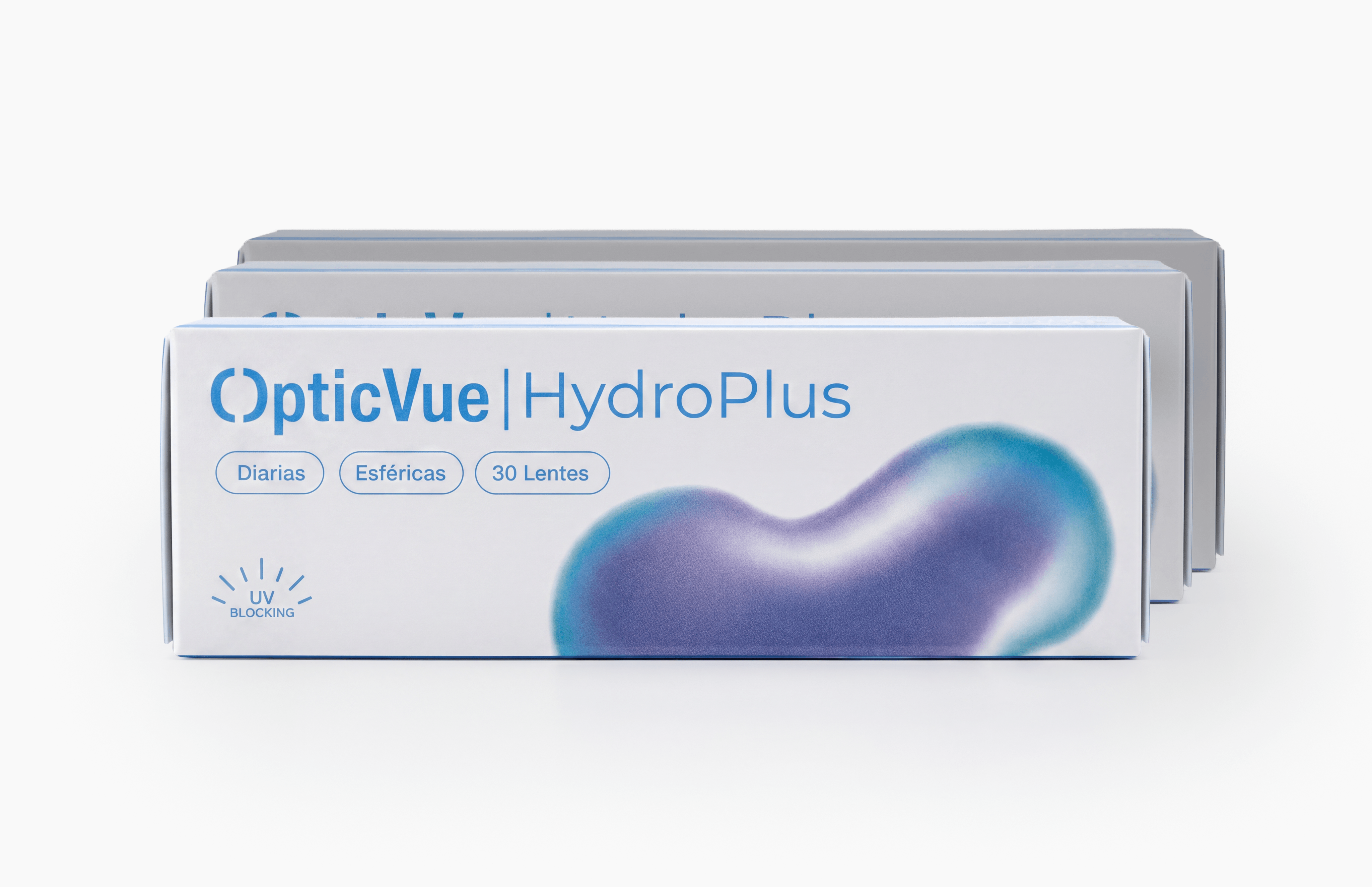
For a brand like OpticVue, this combination makes a lot of sense for someone who wants to make a quick purchase without sacrificing the trust of the pharmacy channel. If you're someone who buys online during the week, but appreciates knowing that the brand is also close to home, that balance adds a lot.
So, what pack is right for you?
If you use dailies, look for simple replenishment that matches your actual frequency. If you use monthlies, a pack with solution is usually the most coherent option. If you have dry eyes, prioritize comfort and hydration over a minimal price difference. And if you've already found a contact lens that works well for you, making that choice an easy repurchase is usually the best move.
Buying contact lenses shouldn't give you extra work. When the pack fits you, everything becomes simpler: you know what to order, how long it lasts, and what to expect every day when you put them in. And in such a daily routine, that's more noticeable than it seems.



Leave a comment
This site is protected by hCaptcha and the hCaptcha Privacy Policy and Terms of Service apply.