
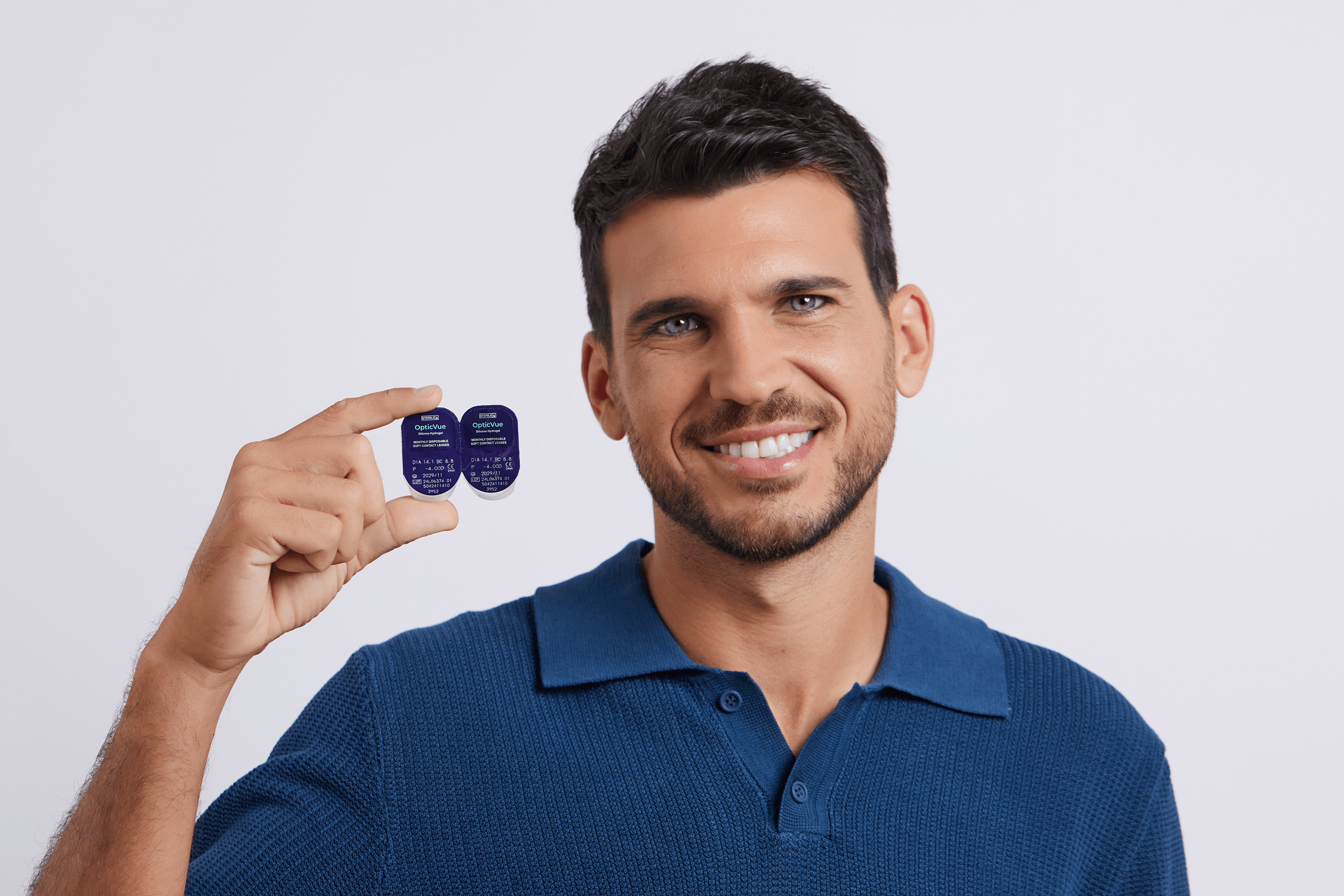
How many hours a day can you wear contact lenses?
Wearing contact lenses is comfortable, practical, and part of many people's daily routines. But one of the most common questions is always the same: how many hours can you wear contact lenses per day?
The general answer is usually between 8 and 12 hours a day, although it depends on the type of lens, your eye sensitivity, the environment you are in, and your specialist's recommendations. Not all eyes respond the same way, which is why it's important to listen to the signals your vision gives you throughout the day.
Furthermore, using daily contact lenses is not the same as monthly contact lenses. Each type has different characteristics and requires a distinct usage routine.
How many hours is it recommended to wear contact lenses?

Generally, many people can wear their contact lenses for a normal workday, approximately between 8 and 12 hours a day. However, this time should not be considered a fixed rule for everyone.
Some people tolerate contact lenses very well for several hours straight, while others start to notice dryness, eye strain, or discomfort sooner. Factors like spending many hours in front of screens, being in air-conditioned environments, working in dry spaces, or not blinking enough also play a role.
The important thing is that contact lenses should not feel uncomfortable. If you notice irritation, blurred vision, redness, or a foreign body sensation, it is advisable to remove them and let your eyes rest.
Can you wear contact lenses for more than 8 hours?
Yes, many people can wear contact lenses for more than 8 hours, provided their eyes tolerate them well and the type of lens is designed for such use. Even so, habitually exceeding many hours of wear can increase the feeling of dryness or eye fatigue, especially if cleaning and replacement guidelines are not followed.
Therefore, rather than just thinking about the exact number of hours, it's better to pay attention to how your eyes respond. If at the end of the day you notice that your contact lenses bother you, that you need to blink more than usual, or that your vision becomes less sharp, it could be a sign that you've been wearing them for too long.
In these cases, it's best to remove them, use glasses if you need them, and consult a professional if the discomfort recurs.
Can I wear contact lenses all day?
It depends. Some people can wear contact lenses for almost their entire day without discomfort, but that doesn't mean it's advisable to force their use.
Wearing contact lenses all day can be comfortable if you adapt well, follow the usage instructions, and choose a lens type suitable for your routine. Even so, your eyes also need rest. Alternating with glasses at certain times of the day can help, especially if you notice dryness or fatigue.
It's also important to remember that, unless your specialist tells you otherwise and you use lenses specifically designed for it, you should not sleep with contact lenses. Organizations like the CDC recommend removing contact lenses before sleeping, showering, or swimming to reduce the risk of eye infections.
How many hours can you wear daily contact lenses?
Daily contact lenses are designed to be worn during the day and discarded at the end of the day. Their main advantage is that you start with a new pair every day, with no need for cleaning or overnight storage.
In terms of wearing hours, they usually adapt well to a normal daily routine, but the actual limit will depend on your eye and your tolerance. If you wear them for many hours and notice dryness, blurred vision, or discomfort, it is advisable to remove them.
Daily contact lenses can be a good option for those seeking a simple, practical, and maintenance-free routine. At OpticVue, HydroPlus Dailies are designed precisely for those who prefer to use a new pair of lenses every day.
How many hours can you wear monthly contact lenses?
Monthly contact lenses are designed to be used during the day and replaced according to the indicated period, usually after several weeks from opening. Unlike daily lenses, they require proper cleaning and storage after each use.
This means that when you take them out, you must store them in their case with an appropriate solution, never with water. The American Academy of Ophthalmology recommends using new solution every time and not reusing old liquid to store lenses.
Monthly contact lenses can be a practical option for those who use contacts frequently and want a more stable routine. At OpticVue, you can find HydroPlus Monthly and HighOxygen Monthly, two options designed for different usage needs.
Factors influencing wear time
Not everyone can wear contact lenses for the same number of hours. Here are some factors that can influence this:
- Type of contact lens: Daily, monthly, or extended wear lenses are not all the same.
- Ocular sensitivity: Some eyes are more prone to dryness or discomfort.
- Environment: Air conditioning, heating, wind, or dry spaces can affect comfort.
- Screens: When we look at screens for a long time, we blink less, which can increase the feeling of dryness.
- Maintenance: For monthly lenses, improper cleaning can affect comfort and safety of use.
- Rest hours: Eyes also need time without contact lenses.
Therefore, although there's a general reference of 8 to 12 hours, the important thing is to adapt the usage to your specific case.
Signs you're wearing contact lenses for too long
Your eye usually tells you when it needs a rest. Some common signs are:
- Dry or irritated eyes.
- Gritty or foreign body sensation.
- Redness.
- Blurred vision.
- Itching or burning.
- Constant need to blink.
- Discomfort at the end of the day.
If any of these signs appear, it is best to remove your contact lenses. If the discomfort continues, consult a healthcare professional.
Tips for safe contact lens use
To wear contact lenses comfortably and safely throughout the day, it's important to follow a basic care routine:
- Wash and dry your hands thoroughly before handling contact lenses.
- Do not sleep with them unless specifically advised by a professional.
- Do not use water to clean or store contact lenses.
- If you use monthly contact lenses, always use fresh solution.
- Respect the indicated replacement period.
- Do not extend use if you experience discomfort.
- Carry backup glasses if you'll be out of the house for many hours.
- Remove contact lenses before showering, swimming, or exposing them to water. The CDC recommends keeping contact lenses away from water, including showers and swimming pools.
Which contact lenses to choose if you wear them for many hours?
If you wear contact lenses for many hours a day, the choice will depend on your routine.
Daily contact lenses can be interesting if you want a practical option, without cleaning and with a new pair every day. Monthly contact lenses can fit if you are looking for a frequent use solution and are willing to maintain a proper cleaning routine.
For long wear times, you might also want to review materials and features such as the type of hydrogel, hydration, or oxygenation. At OpticVue, the HighOxygen Monthly range is designed for those seeking a monthly option for extended use, while HydroPlus is geared towards a comfortable and hydrated daily wearing experience.
Conclusion
So, how many hours can you wear contact lenses per day?
As a general reference, many people wear them for 8 to 12 hours daily, but there is no single answer for everyone. The ideal time depends on the type of contact lens, your eye sensitivity, the environment, and how you feel while wearing them.
If you experience dryness, blurred vision, redness, or discomfort, do not force it. Remove your contact lenses, let your eyes rest, and consult a professional if the discomfort recurs.
At OpticVue, you can find daily and monthly contact lenses for myopia, designed to adapt to different usage routines, both online and in selected pharmacies.
FAQ
Is wearing contact lenses for many hours bad?
It can be if your eyes start to show signs of dryness, irritation, or fatigue. While many people tolerate contact lenses well during a normal day, it's not advisable to force their use if discomfort arises.
Can I nap with contact lenses on?
It is not recommended to sleep with contact lenses, even for a short nap, unless a professional has specifically instructed you that you can do so with a lens type suitable for it.
What happens if I wear contact lenses for more than 12 hours?
Nothing specific may happen if your eyes tolerate them well, but wearing them for too many hours habitually can increase dryness, discomfort, or the risk of irritation. If you feel discomfort, remove them.
Do daily contact lenses last all day?
Daily contact lenses are designed to be worn for one day and then discarded. Even so, the number of hours will depend on your eye, the environment, and the product's usage instructions.
Can monthly contact lenses be worn every day?
Yes, monthly contact lenses can be used daily during their replacement period, provided they are properly cleaned, stored, and handled after each use.
Can I use contact lens solution to hydrate my eye?
No. Contact lens solution is designed to clean, store, and disinfect lenses, not to be applied directly to the eye. To hydrate your eyes, use eye drops compatible with contact lenses if you need them and consult a professional.



Leave a comment
This site is protected by hCaptcha and the hCaptcha Privacy Policy and Terms of Service apply.